
At a trade show last year, a European buyer picked up one of our rubberwood perches, checked the grain, and asked the question we hear monthly: “This is hardwood pricing at softwood cost — what’s the catch?” There isn’t one, but there is a story most buyers haven’t heard: where rubberwood comes from, why it behaves like a hardwood, and where its limits sit. If you source wooden pet furniture, rubberwood cat furniture deserves a serious look.
What Is Rubberwood Cat Furniture?
Rubberwood cat furniture is pet furniture built from Hevea brasiliensis — the rubber tree — harvested from managed plantations at the end of their latex-producing cycle. It is a true hardwood (roughly 960 lbf Janka), machines cleanly, finishes evenly, and typically costs well below oak or walnut. For buyers, it means hardwood performance in the mid-range tier, backed by a plantation-grown sustainability story that resonates with Western retail customers.
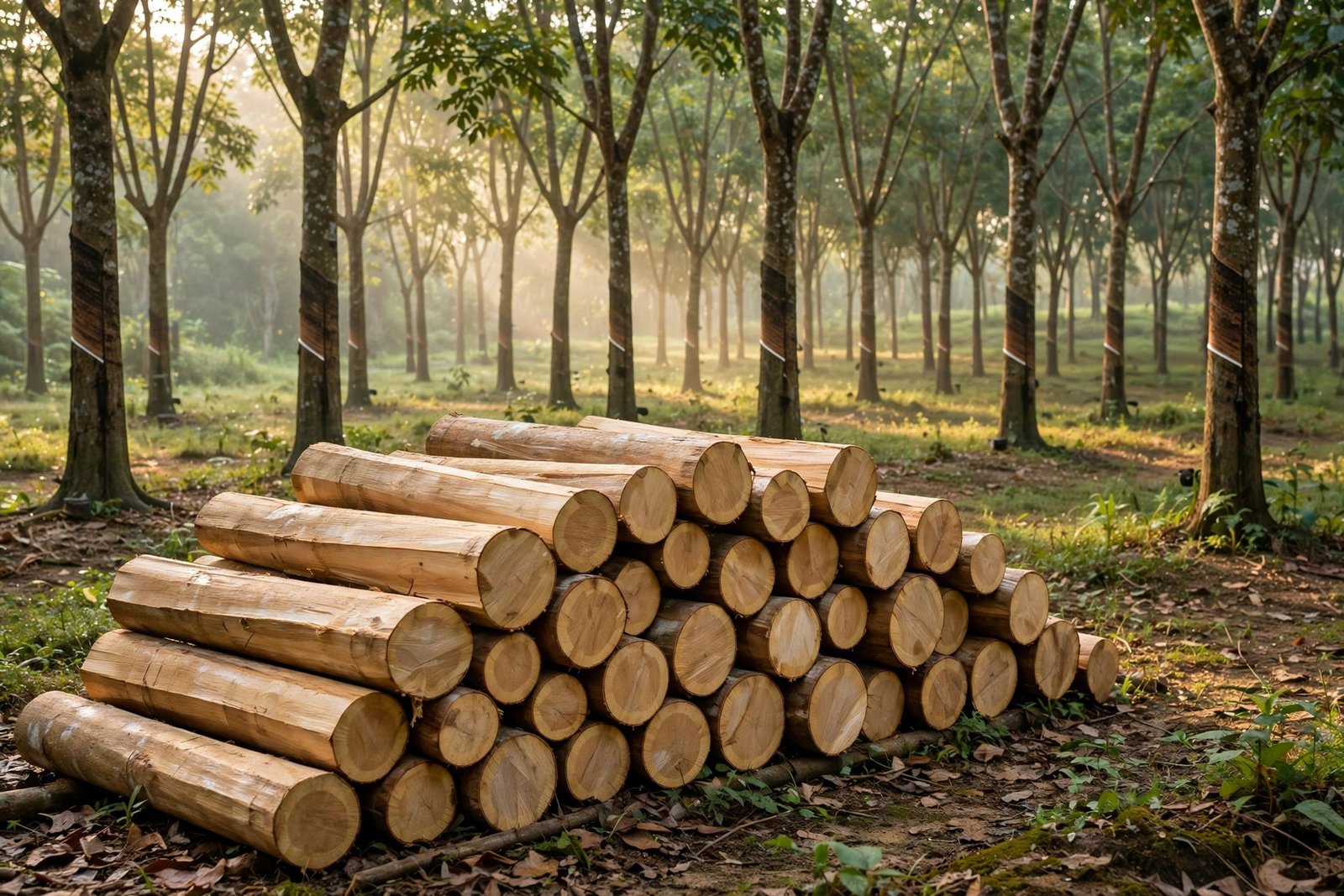
The name confuses first-time buyers: “rubberwood” sounds soft or synthetic. It is neither. The trees produce natural latex for about 25–30 years; when latex yield drops, plantations replant and the mature trunks enter the timber stream instead of being burned or wasted. That cycle is the entire sustainability case in one sentence.
Where Rubberwood Comes From: The Plantation Cycle
Understanding the supply chain explains both the price and the eco-credentials. Rubber plantations in Southeast Asia operate on a replanting cycle: trees are tapped for latex for decades, then felled to make room for new planting. Historically much of this wood was waste; today it feeds a mature furniture-timber industry with established grading, drying, and finger-jointing infrastructure.
Two consequences matter for buyers. First, supply is plantation-grown by definition — no old-growth forest enters the chain, which simplifies the sustainable-forestry conversation with your retail customers. Second, because the raw material exists as a byproduct of the latex industry, pricing stays structurally below comparable hardwoods. Neither point requires certification paperwork to be true, though FSC chain-of-custody certification exists for brands that need the logo — see the FSC standard for how the chain works.
Rubberwood vs Oak and Pine for Cat Furniture
Buyers usually shortlist rubberwood against pine below it and oak above it. Hardness figures from the Wood Database; the honest comparison:
| Factor | Pino | Madera de caucho | Roble |
|---|---|---|---|
| Hardness (Janka, lbf) | ~380 | ~960 | ~1,290 |
| Claw dent resistance | Low — marks expected | Good for daily use | Excelente |
| Peso | Ligero | Mediano | Pesado |
| Calidad del acabado | Good, soft grain | Very good, straight grain | Excellent, open grain |
| Relative cost | Bajo | Low–mid | Mid–high |
| Sustainability story | Managed forests | Plantation byproduct | Varies by source |
Against pine, rubberwood’s advantage is hardness: at nearly triple the Janka rating, it resists the daily claw wear that marks pine visibly. Against oak, the trade is finish depth and prestige versus cost and weight — oak still wins the luxury tier, but rubberwood closes most of the functional gap at a friendlier price. Our wood species scorecard puts all three in a buyer’s decision framework.
The Sustainability Story Your Marketing Can Actually Use
Sustainability claims only work when they’re specific, and rubberwood gives you specifics: plantation-grown (not forest-harvested), a byproduct stream (not purpose-felled), and a carbon story your copywriter can verify — using wood that would otherwise be waste keeps carbon stored in furniture instead of released. For EU buyers navigating green-claims scrutiny, that verifiability matters more than adjectives.
FSC certification is the optional upgrade. If your brand wants the FSC label on pack, the factory must hold chain-of-custody certification and track certified material through production — ask for the certificate code and verify it in the FSC database before you print anything. We run both certified and non-certified rubberwood lines; the wood is the same, the paperwork differs. Don’t let anyone charge you a sustainability premium for uncertified stock with a nice story.
How Factories Work With Rubberwood: Finger Joints and Finishing
In our workshop, rubberwood arrives as finger-jointed boards — shorter lengths joined with interlocking fingers and structural adhesive. This is standard practice across the industry, not a shortcut: plantation logs yield shorter clear lengths, and finger-jointing turns them into stable, usable boards. The joint QC is what separates good factories from careless ones — we pull-test joint samples per batch, because a weak finger joint in a load-bearing post is a failure waiting for a jumping cat.
Rubberwood machines like a cooperative hardwood: clean edges on CNC, minimal tear-out, and a straight, subtle grain that takes water-based coating evenly. In our finishing line, rubberwood gets the same prep discipline as oak — sand, dedust, break sharp edges — because the most common finish failure on any species is coating over dusty wood, not the wood itself. Two coats of water-based finish with a light scuff-sand between them gives the hard, claw-resistant surface buyers expect.
One processing note buyers should know: fresh rubberwood has higher sugar content than oak, so proper kiln-drying and storage matter — boards left damp can develop surface mold before they ever reach the line. Our incoming inspection rejects any bundle showing it, and kiln certificates must state final moisture content (8–12%), not just the word “kiln-dried.” Finishing details: guía de acabados de madera seguros para mascotas.
Honest Limits: What Rubberwood Doesn’t Do Well
Two limits, stated plainly. First, rubberwood will never match oak’s grain character — its straight, pale grain is clean but quiet, so brands selling on dramatic figure should look at walnut or oak instead. Second, the finger-jointed supply means very long clear spans (over ~1.2 m without a joint) aren’t its strength; designs with long unsupported beams should be engineered around that or specified in another species. Neither limit affects typical cat tree components — posts, perches, and platforms all sit comfortably inside rubberwood’s strengths.
Desde nuestra fábrica: Watch how finger-jointed hardwood is kiln-dried to 8-12% moisture before it ever reaches the line — the factory step that keeps a rubberwood cat tree stable for years.
Preguntas frecuentes
Is rubberwood real wood or engineered?
Real wood. Rubberwood (Hevea brasiliensis) is a natural hardwood from rubber plantation trees. It is typically finger-jointed from shorter boards, which is standard solid-wood practice, not engineering.
Is rubberwood durable enough for cat furniture?
Yes for the mid-range tier. At ~960 lbf Janka it resists daily claw wear far better than pine, and its machining stability suits posts, perches, and platforms. For the luxury tier, oak still leads on finish depth.
Why is rubberwood cheaper than oak?
It is a plantation byproduct: the trees are grown for latex, and timber is the end-of-cycle use. Supply is structurally abundant, which keeps pricing below purpose-grown hardwoods like oak.
Is rubberwood actually sustainable?
Its baseline case is strong: plantation-grown, byproduct stream, no old-growth harvest. FSC chain-of-custody certification is available for brands that need the logo — verify the factory’s certificate code before printing claims.
Does rubberwood contain latex that could affect cats?
No. The latex is harvested from living trees; the timber contains no meaningful latex residue after processing and kiln-drying. Finished, coated rubberwood furniture is safe for pets.
What should I check when auditing a rubberwood supplier?
Finger-joint QC records, kiln certificates with stated moisture content (8–12%), mold inspection at incoming, and FSC certificate codes if certified stock is claimed.
Considering rubberwood for your line? Solicitar presupuesto and tell us your target tier — we’ll advise on species selection, joint engineering, and the finish system to match. For custom dimensions or branding on a rubberwood line, see our Proceso OEM/ODM.
Soporte OEM/ODM
¿Necesita un plan de producción de árboles para gatos personalizado?
Envíe fotos de referencia, dimensiones objetivo, preferencias de materiales, necesidades de embalaje y dirección de mercado. Podemos revisar la viabilidad, el muestreo, el MOQ y el embalaje de exportación antes de la producción. Solicitar cotización OEMLíneas de productos relacionadas
Explore muebles para gatos de madera que podemos fabricar.
Guías de Compra Relacionadas