
A brand partner sent us a returned unit last quarter. Cracked platform, one bent bolt, missing dowel — all because a European end customer opened the flat pack in the wrong order and forced a joint that wasn’t meant to carry load until the next step. The retail listing lost two stars overnight. That single return told us more about flat pack cat tree manufacturing than any datasheet: the box, the sequence, the hardware pouch, and the instruction sheet matter as much as the wood.
If you’re sourcing flat pack cat trees for wholesale or private label, this page walks through what a serious flat pack cat tree manufacturer actually engineers — beyond “we ship in a box.” Structure choices, container math, assembly documentation, and the design bench behind it all.
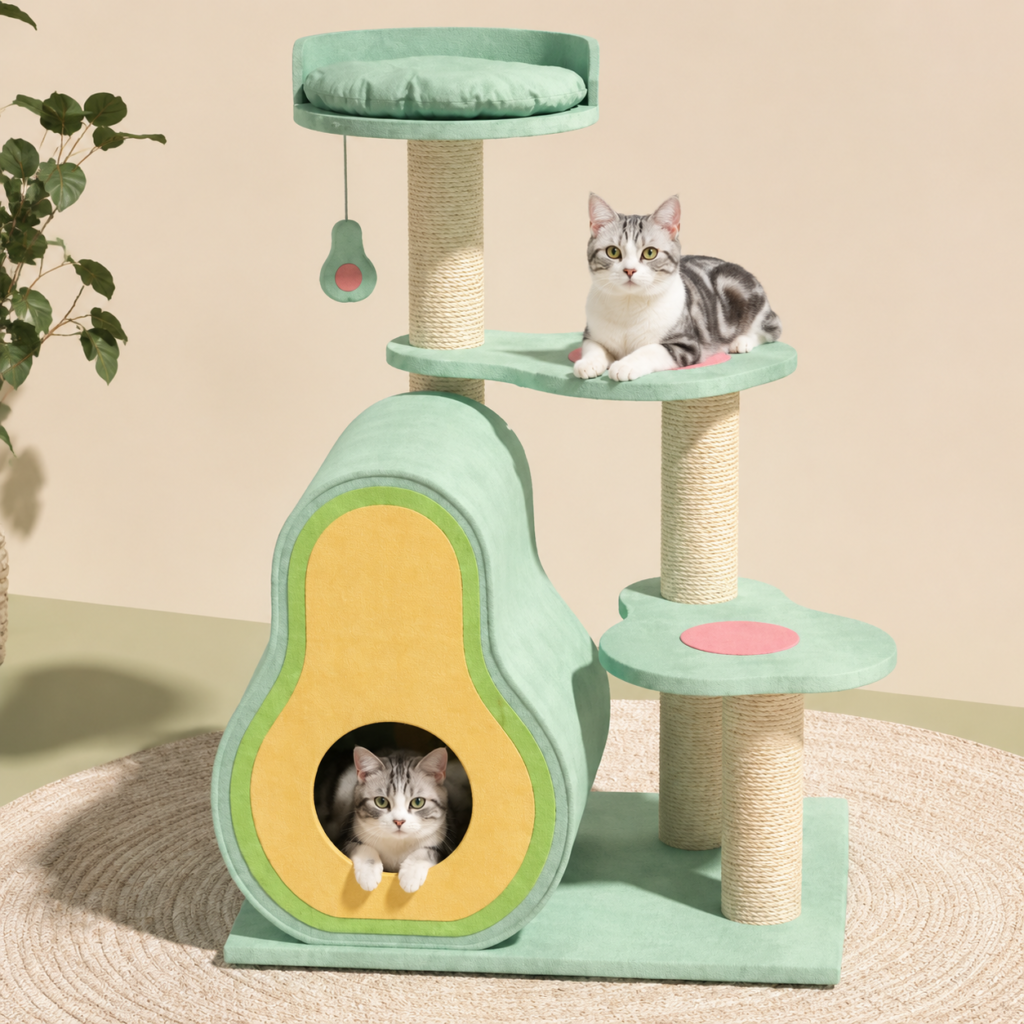
What Flat Pack Really Costs to Engineer
Flat packing looks like a packaging decision. It’s a structural decision that starts on the CAD screen.
A freestanding cat tree that survives shipping fully assembled will not automatically survive flat-packed and reassembled at the customer’s home. The joints have to be re-tightenable without stripping. The hardware needs to seat in pre-drilled positions that hold torque across three or four cycles (factory test-fit, disassembly, retail return handling, end-user assembly). The board edges need to survive being stacked flat against each other for six weeks at sea with humidity swings between 40% and 85%.
We size threaded inserts based on the wood species. Pine takes a coarser insert; birch and rubberwood tolerate a finer thread with higher pull-out strength. On platforms that will carry a 7 kg cat landing from height, we pre-embed steel inserts at the factory rather than shipping raw wood with a “screw here” mark — that single change dropped one of our brand partners’ assembly-related returns significantly in the first year.
Board protection is where a lot of “flat pack” suppliers cut corners. We wrap each finished panel in a foam sleeve, then stack with corrugated interlayers, then place the hardware pouch in a recessed corner cutout so the fasteners never rub against a finished face. Drop-tested from 80 cm on each of the six faces — the standard we use before releasing a new SKU packaging spec.
Container Math: Why Flat Pack Is a Logistics Product
A fully assembled mid-size cat tree occupies roughly 0.18–0.22 CBM in retail packaging. The same product flat-packed drops to 0.05–0.07 CBM. For a 40HQ container, that’s the difference between roughly 300 units assembled and 900+ units flat-packed. Ocean freight cost per unit drops accordingly — often more than 60% on the freight line item alone.
But the math only works if the packing plan is engineered properly. A few things we’ve learned from moving these boxes:
- Board orientation matters. Long panels laid flat maximize cube utilization; stood on edge, they waste vertical space and expose corners to impact.
- Mixed SKU pallets need a load plan. A brand partner running 5 SKUs in one container needs a stacking diagram that respects the weakest box on the bottom row. We provide this per shipment.
- LCL shipments cost more per CBM but preserve cash flow on first orders. Flat pack cat trees are one of the few product categories where LCL is genuinely viable — the density is high enough that even a 3–5 CBM booking makes sense. Our pet furniture export packaging guide covers the crate-vs-carton decision in more depth.
- Destination-side handling is the hidden cost. A brand shipping to a 3PL in New Jersey pays differently than one shipping to a residential last-mile in Germany. Flat pack cartons that fit standard EU pallet footprints (1200 × 800 mm) reduce handling fees at Rotterdam and Hamburg.
Buyers who plan only for FOB China miss half the cost picture. The right flat pack cat tree manufacturer will discuss destination stacking, pallet compatibility, and last-mile carton size limits before finalizing the packaging spec.
Assembly Documentation Is the Silent Return-Rate Driver
The single biggest return driver on flat pack furniture — across every category, not just cat trees — is confused assembly. A customer who spends 40 minutes on step 3 and can’t figure out which side of the panel faces up will send the whole thing back, regardless of how good the wood is.
What we put in every box:
- Multi-language pictorial instructions (currently English, German, French, Spanish, Japanese — additional languages on request, no extra tooling cost)
- Torque values marked on the hardware pouch for the two or three joints that matter structurally
- A numbered hardware sequence — bag 1 for step 1, bag 2 for step 2 — instead of one big pouch of mixed fasteners
- A QR code on the instruction sheet linking to a 60-second assembly video (hosted on the brand’s channel if requested)
- A “check before you start” panel identifying which side of each board is the show face
None of this is free. It adds roughly USD 0.40–0.80 per unit to the packaging cost. It also cuts assembly-related returns to a fraction of what they’d be with a generic instruction sheet. On a wholesale margin, that math pays back inside the first container.
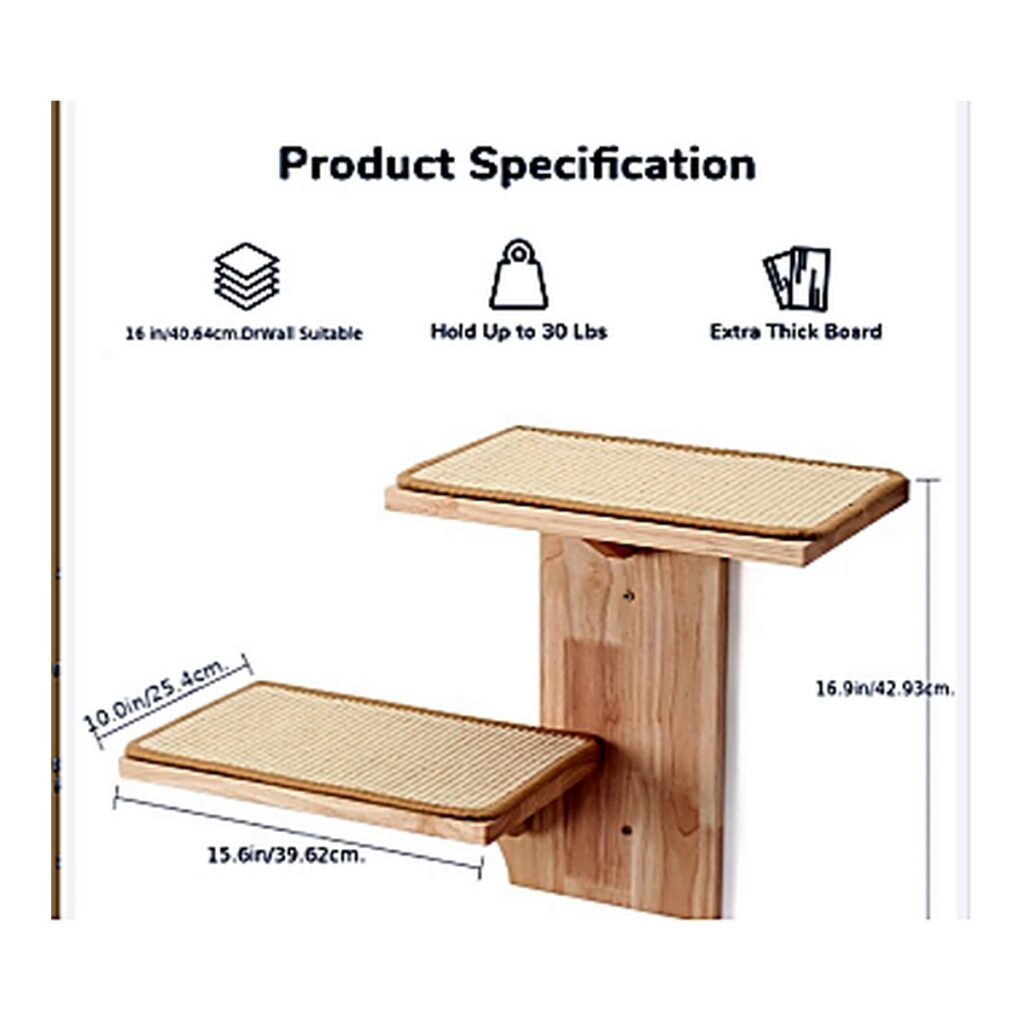
Where Flat Pack Doesn’t Work (Honest Limits)
Not every cat tree should be flat-packed. A few cases where we’ll advise a brand to ship pre-assembled or partially assembled:
- Curved sisal columns wrapped at the factory — unwrapping and rewrapping at the customer’s home never looks as tight. Ship these pre-assembled to the base.
- Floor-to-ceiling tension rod designs with pre-calibrated telescoping sections — the calibration is easier to protect assembled than to walk a customer through.
- Ultra-premium retail SKUs where the unboxing experience is part of the brand promise. Some Japanese and Nordic buyers explicitly want assembled units for department store channels.
- Very small platforms with hidden joinery (dovetail, mortise-and-tenon accents) — flat packing forces exposed hardware, which some designer brands won’t accept.
If your product line includes any of these, we’ll flag it at the design review stage rather than force a flat pack format that hurts the finished product.
Our In-House Design Team: The Difference Between Copying and Creating
Most flat pack cat tree manufacturers work from customer files or a shared industry catalog. That’s how you end up with five brands selling the same cat tree in five different colors on Amazon.
We run an in-house design team on the factory floor. Six full-time industrial designers, two CAD engineers, and a prototyping bench that can turn a rough concept sketch into a working sample inside 10–14 working days. What that means in practice for a wholesale buyer:
- Original design to your brand’s aesthetic. Send us mood boards, competitor teardowns, or a rough sketch on a napkin. We’ll come back with three concept directions, not a repackaged version of last year’s bestseller.
- Full customization stack. Dimensions, wood species, finish (natural, walnut, whitewash, custom stain match), sisal color and diameter, platform shape, hardware finish, retail packaging artwork, hangtags, laser-etched or branded end caps, and logo placement. Any layer, standalone or combined.
- Design-to-sample loop that actually closes. Weekly design review calls during the concept phase. Sample photos and dimension confirmation before cutting production panels. Video calls with the designer who drew your file, not a sales layer in between.
- Sample lead time on original designs is 12–18 business days, depending on finish complexity and whether the tooling exists. Reorders on established SKUs pull inside that window.
The full OEM sequence — brief, concept, sample, production, shipment — is documented in our cat tree OEM process walkthrough.
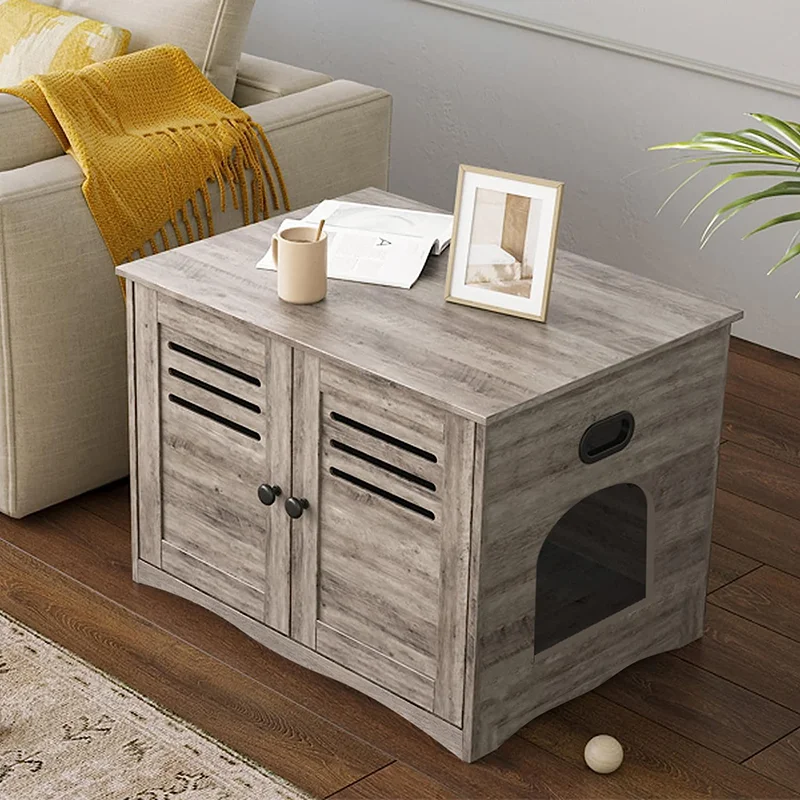
Configurations We Produce as Flat Pack
| Format | Flat pack suitability | Notes |
|---|---|---|
| Small 2–3 tier towers | Excellent | Single-carton, sub-0.06 CBM |
| Mid-size 4–5 tier freestanding | Very good | Sometimes split across 2 cartons for retail channels |
| Large cat variants (Maine Coon scale) | Good | See our large cat tree wholesale options; heavier boards benefit from double-wall cartons |
| Modular add-on systems | Excellent | Base unit + accessories ship as separate SKUs |
| Floor-to-ceiling tension rod | Partial | Ships flat, but calibration section pre-assembled |
| Fully hand-joined designer pieces | Not recommended | Ship assembled |
MOQ can be discussed by project — it depends on wood species, finish complexity, and how much of the customization stack you’re using.
FAQ
How much freight cost do buyers actually save by going flat pack?
On ocean freight alone, typically 55–70% per unit compared to assembled shipping, driven by 3–4× better container utilization. Total landed cost savings are usually 20–35% after accounting for the extra packaging materials and assembly time on the retail end.
Do you provide branded packaging and instructions?
Yes. Retail-ready boxes with your artwork, branded instruction sheets, custom hangtags, and QR-coded assembly videos. Setup cost is one-time per SKU; unit cost impact is modest at wholesale volumes.
Can you match a finish from a physical sample?
Yes. Send a physical swatch or a Pantone reference and we’ll produce finish samples for approval before production. Typical finish sample turnaround is 5–7 business days.
What if the end customer strips a threaded insert during assembly?
We ship one spare of each critical fastener in the hardware pouch, plus a replacement insert kit on request for higher-tier retail programs. Our instruction sheet flags the torque limit on the two joints where this risk is highest.
Is flat pack always the right choice?
No. See the honest limits section above. For premium hand-joined SKUs or designs with pre-wrapped sisal columns, we recommend assembled or partially assembled shipping.
How do I start an OEM project with your design team?
Send a brief — even a rough one — through our request a quote page, or email shelly@solidpetwood.com directly. Include target retail price, estimated volume, and any reference images. A designer will be assigned within two business days.
Talk to a Flat Pack Cat Tree Manufacturer
If flat pack is central to your product-line economics — and for most brands scaling past their first container, it is — the packaging, hardware, and assembly documentation deserve as much attention as the wood itself. That’s how we work.
Or email shelly@solidpetwood.com with your brief, target ceiling for landed cost, and any reference designs. We’ll come back with configuration options and a realistic sample timeline.
OEM/ODM Support
Need a custom cat tree production plan?
Send reference photos, target dimensions, material preferences, packaging needs, and market direction. We can review feasibility, sampling, MOQ, and export packaging before production. Request OEM QuoteRelated Product Lines
Explore wooden cat furniture we can manufacture.
Related Buyer Guides