
A regional pet chain receives its first pallet of cat trees. The product inside is flawless, but two cartons arrive crushed at the corners. The buyer doesn’t blame the carrier — they blame the supplier. Retail ready packaging for cat furniture is the difference between a product that survives distribution and one that generates claims.
What Makes Cat Furniture Packaging “Retail Ready”?
Retail ready packaging for cat furniture means cartons engineered to survive parcel and pallet distribution, present cleanly on retail shelves, and assemble without missing parts. For the factory, that is three tasks: structural design that passes ISTA 3A drop testing, carton dimensions sized for container cube and FBA tiers, and a packing process where the thousandth carton matches the first.
It also means the carton carries your brand correctly — barcodes that scan, graphics that match the proof, handling marks crews read. The carton is the first thing the retailer’s receiving team judges.
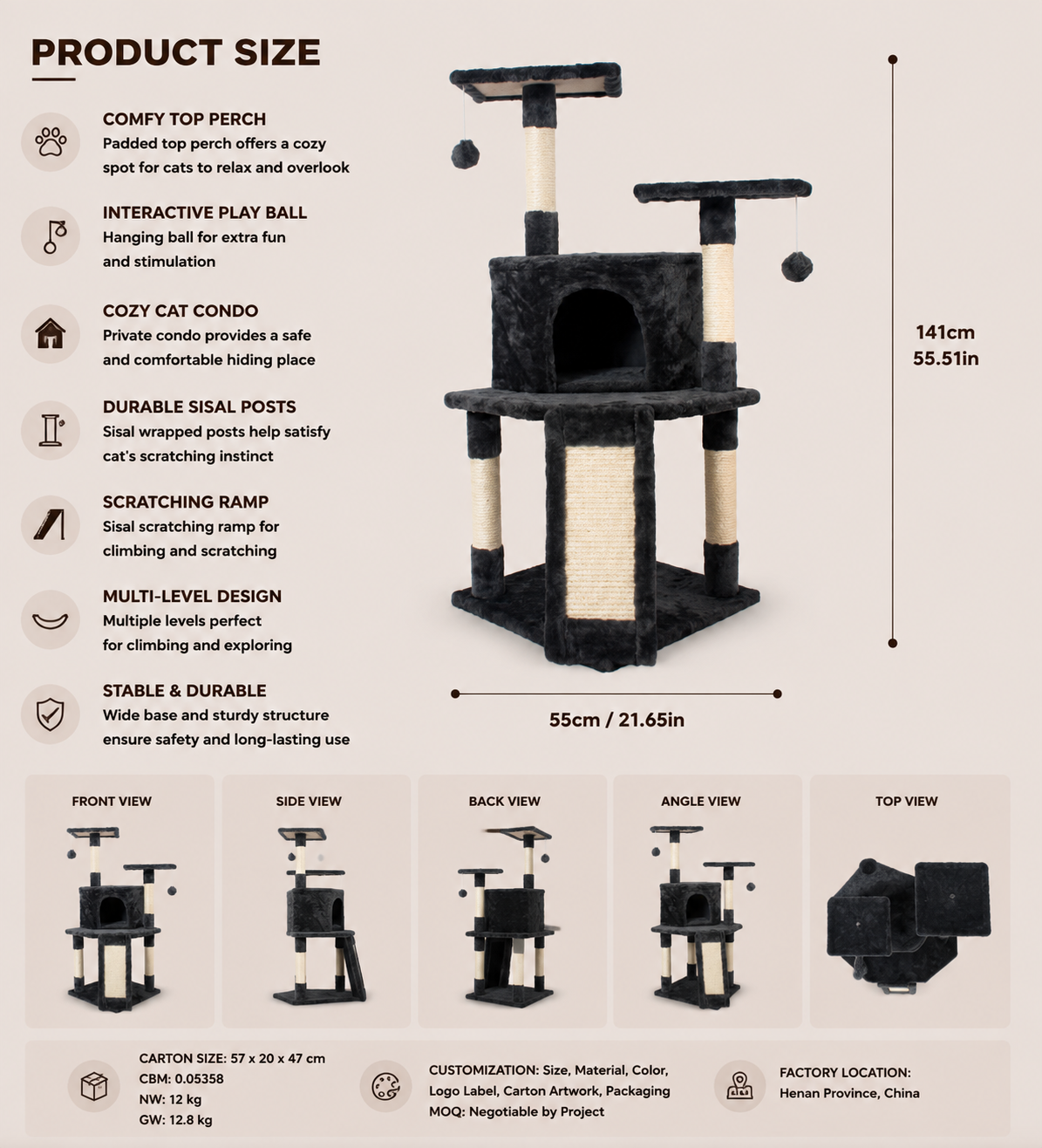
ISTA 3A Drop Testing: Simulating the Parcel Journey
ISTA 3A is the benchmark for parcel shipments up to 70 kg: atmospheric conditioning, random vibration with and without top load, and shock testing matched to package weight, per the ISTA 3A test procedure. It simulates the real abuse — conveyor drops, trailer compression, vibration across thousands of kilometers.
On our bench, every new carton design runs the full sequence before tooling is cut: corner, edge, and flat-face drops, then inspection for part damage, hardware rupture, and finish scuffing — and we retest after every reinforcement. That loop — test, fail, reinforce, retest — separates packaging designed on paper from packaging proven in a lab.
| ISTA 3A Element | What It Simulates |
|---|---|
| Atmospheric conditioning | Humidity and temperature swings in transit |
| Vibration, no top load | Loose parcel conveyor and truck ride |
| Vibration, top load | Stacked trailer compression |
| Shock / drop sequence | Conveyor drops and manual handling |
A cheap factory ships the first carton design that looks right. A specialized manufacturer ships the design that survived the lab.
Carton Dimension Engineering: Flat-Pack Structure and Cube Efficiency
A cat tree ships as a flat pack, and the carton is a geometry problem: every centimeter of wasted space multiplies across a container into real freight cost. We design carton dimensions from the parts outward — nesting columns, platforms, and scratching posts so packed volume hugs the parts with minimal void.
This isn’t marketing — it’s the direct math of container cube: tighter cartons mean more units per container and lower landed cost on FCL shipments. Our shipping pet furniture from China overview explains the freight math; our coût d'expédition de meubles pour animaux de compagnie guide covers the cost side. The honest trade-off: cube efficiency and drop performance pull in opposite directions — tighter packing needs smarter internal cushioning.
| Type de produit | Flat-Pack Volume | Reduction vs Assembled |
|---|---|---|
| Small cat tree (60–80 cm) | 0.10–0.15 CBM | 60–70% |
| Medium cat tree (100–140 cm) | 0.15–0.25 CBM | 65–75% |
| Large cat tree (150 cm+) | 0.25–0.40 CBM | 70–75% |
| Cat house / condo | 0.15–0.30 CBM | 65–70% |
Retail Ready Packaging Starts With the Right Corrugated Grade
The grade decision follows carton weight and stacking pressure — not guesswork. We specify double-wall board for any cat furniture carton over roughly 15 kg; single-wall board crushes under full-pallet stacking pressure, especially after ocean-transit humidity softens the flutes.
| Carton Weight | Board Grade | Pourquoi |
|---|---|---|
| Under 10 kg | Single-wall, ≥32 ECT | Parcel-safe for light cartons |
| 10–20 kg | Double-wall, ≥44 ECT | Resists pallet stacking pressure |
| Over 20 kg | Double-wall, ≥48 ECT + corner protectors | Pallet stacking plus humidity exposure |
Edge-crush strength goes on the carton drawing, and incoming board lots are verified against that spec before the die-cutter runs. Artwork approval means a physical proof sign-off, not a PDF. FSC-certified board is available for chain-of-custody claims; the FSC certification system verifies responsible sourcing.
Amazon FBA Size Tiers: Designing Cartons That Survive the Algorithm
For ecommerce sellers, the carton must fit Amazon’s reality: FBA size tiers penalize oversized cartons with steep fees, and the gap between tiers can erase a product’s margin. We design flat-pack cartons against tier thresholds from day one, so the finished carton lands in the intended tier.
One warning from our floor: FBA measures the carton as received, so we engineer a safety margin under each tier threshold — a humidity-swollen corner can push a borderline carton into the next tier.
The Packing Line: IPQC Checks That Keep Packaging Consistent
Packaging engineering is worthless if the line drifts. Stations work from illustrated instructions: parts sequence, hardware kit placement, divider orientation, tape pattern, label position. IPQC verifies the first packed carton of each shift against the golden sample, then spot-checks the rest.
Weight is the quiet hero of packaging QC. Every finished carton crosses a checkweigher; cartons outside tolerance get opened. Overweight usually means a double-packed part; underweight means a missing component. That single check catches the errors behind the most painful complaints: missing hardware bags and instruction sheets.
White Label and Private Label: Packaging for Your Brand
Retail ready packaging increasingly means your brand, not the factory’s. Our private label and white label workflow keeps brand artwork under revision control: each buyer’s dielines, proofs, and approval records live in a dedicated file, and the line runs only against approved, versioned artwork. Mixed-brand lines get a full line clearance between brands.
Prototype cartons ship flat for approval before die tooling is committed — so a structural change costs a sample revision instead of a scrapped die.
Where Packaging Engineering Hits Its Limits
Two honest constraints. First, no carton survives deliberate abuse — forklift tines through a pallet defeat any corrugated grade. Second, the lightest carton is not the best: shaving board grade saves pennies per unit but raises damage claims that cost dollars per unit. Let the ISTA 3A results set the minimum board grade, not the purchasing spreadsheet.
Lock packaging design before production tooling, not after — bespoke structural redesigns need tooling time and proof cycles, and late packaging changes are the most common cause of delayed shipments we see.
How Solid Pet Wood Builds Retail Ready Packaging
We treat the carton as part of the product:
- Design-team ownership: in-house designers draw the carton from the parts outward, nesting components for cube efficiency.
- Lab-proven structure: every new carton design runs the ISTA 3A sequence — test, fail, reinforce, retest — before tooling is cut.
- Line discipline: IPQC golden-sample checks and checkweigher verification keep the thousandth carton identical to the first.
- Brand-ready execution: private label artwork under revision control, physical proof sign-off, full line clearance between brands.
If your cartons arrive crushed or oversized, pour un examen d'ingénierie avant l'outillage. with your dimensions and damage photos — retail ready starts at the carton drawing.
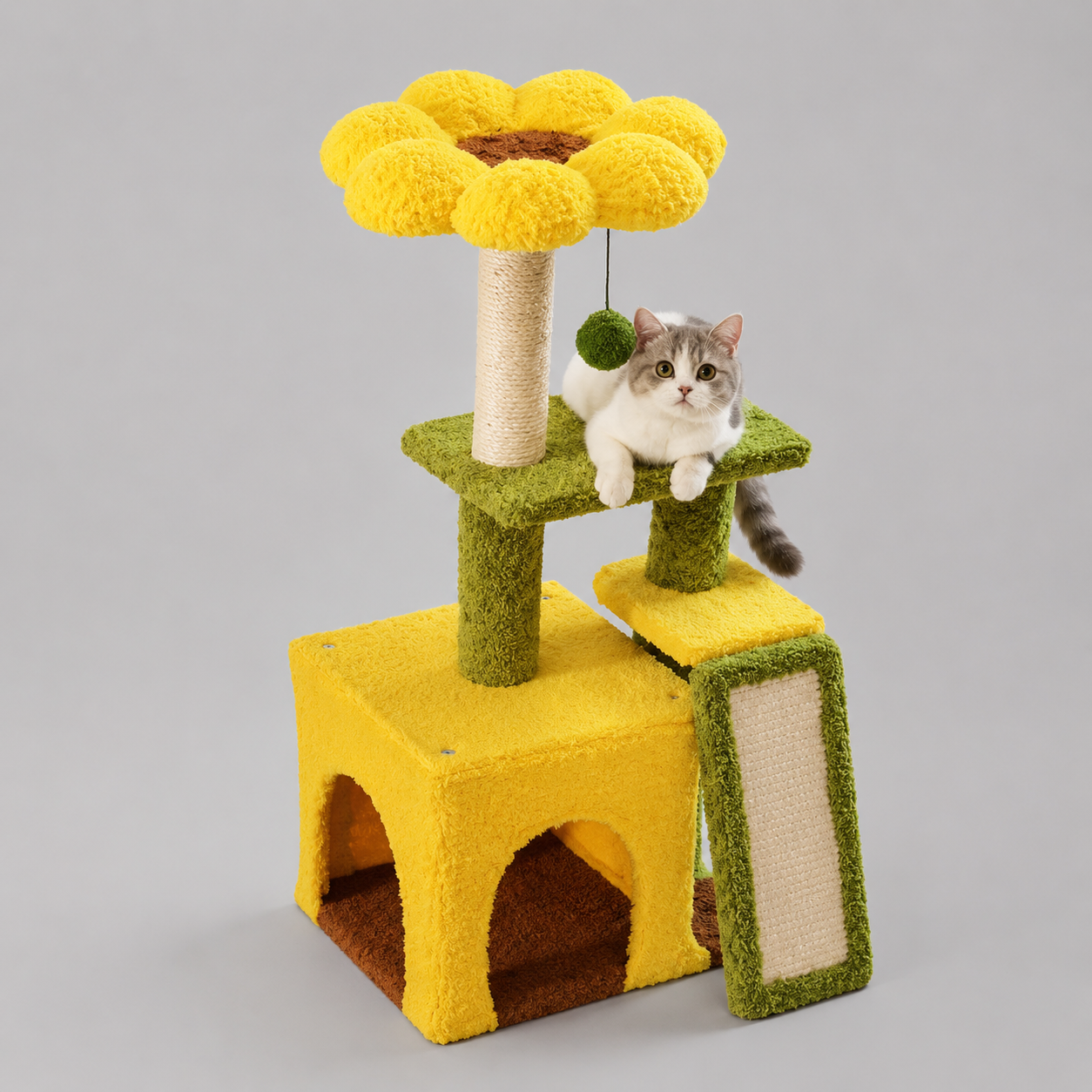
voir notre atelier où les meubles pour chats en bois massif sont usinés et assemblés. See how a solid wood cat tree is packed, sealed, and palletized for wholesale distribution.
FAQ
What is retail ready packaging for cat furniture?
Cartons engineered to survive parcel and pallet distribution, present cleanly on shelves, and assemble without missing parts — covering structural design, ISTA 3A testing, carton dimensions, brand graphics, and packing-line QC.
What does ISTA 3A testing involve?
A general simulation test for parcel-delivery shipments up to 70 kg: atmospheric conditioning, random vibration with and without top load, and shock/drop testing matched to package weight.
How do carton dimensions affect shipping costs?
Dimensions decide how many units fit per container and which FBA size tier applies. Tighter flat-pack cartons mean more units per FCL container and lower per-unit freight cost.
What corrugated grade should cat furniture cartons use?
Double-wall corrugated for cartons over roughly 15 kg, with edge-crush strength verified on incoming board lots. Single-wall board risks crushing under pallet stacking pressure after ocean-transit humidity exposure.
Can the factory handle private label packaging?
Yes — private label and white label packaging is standard: buyer artwork under revision control, physical proof sign-off, barcodes and labeling to spec, multilingual instructions, and full line clearance between brands.
What are the limits of packaging engineering?
No carton survives deliberate abuse like forklift damage, and shaving board grade raises damage claims that cost more than the savings. Bespoke redesigns need tooling time and proof cycles — lock packaging before production tooling, not after.
Support OEM/ODM
Besoin d'un plan de production personnalisé pour un arbre à chat ?
Envoyez des photos de référence, les dimensions cibles, les préférences de matériaux, les besoins en emballage et la direction du marché. Nous pouvons examiner la faisabilité, l'échantillonnage, les MOQ et l'emballage d'exportation avant la production. Demander un devis OEMLignes de produits associées
Explorez les meubles pour chats en bois que nous pouvons fabriquer.
Guides d'achat associés