
The global pet furniture market is undergoing a rapid evolution. International consumers now seek products that seamlessly combine structural functionality, long-term durability, and modern home aesthetics. Modern pet owners are no longer satisfied with low-end plastic pet products or volatile, unstable particleboard units. Instead, they actively choose premium, furniture-grade wooden pet furniture that coordinates with high-end interior design. It also withstands the rigors of daily pet use.
For global pet brands, procurement managers, international wholesalers, and enterprise e-commerce sellers, selecting the right pet furniture manufacturer is critical. It is the single most important decision in securing a profitable, scalable product line.
A highly specialized manufacturing partner helps brands systematically mitigate:
- Structural product defects and manufacturing scrap rates.
- In-transit shipping damage and panel bruising.
- High customer return rates that cannibalize e-commerce margins.
- Unpredictable production delays and supply chain friction.
- Batch-to-batch quality inconsistencies.
- Skyrocketing ocean freight expenditures and unoptimized cargo volumes.
At SolidPetWood, we specialize in contract OEM and custom ODM solid wood pet furniture manufacturing. We deliver the industrial scalability and supply chain security that top-tier global brands require.
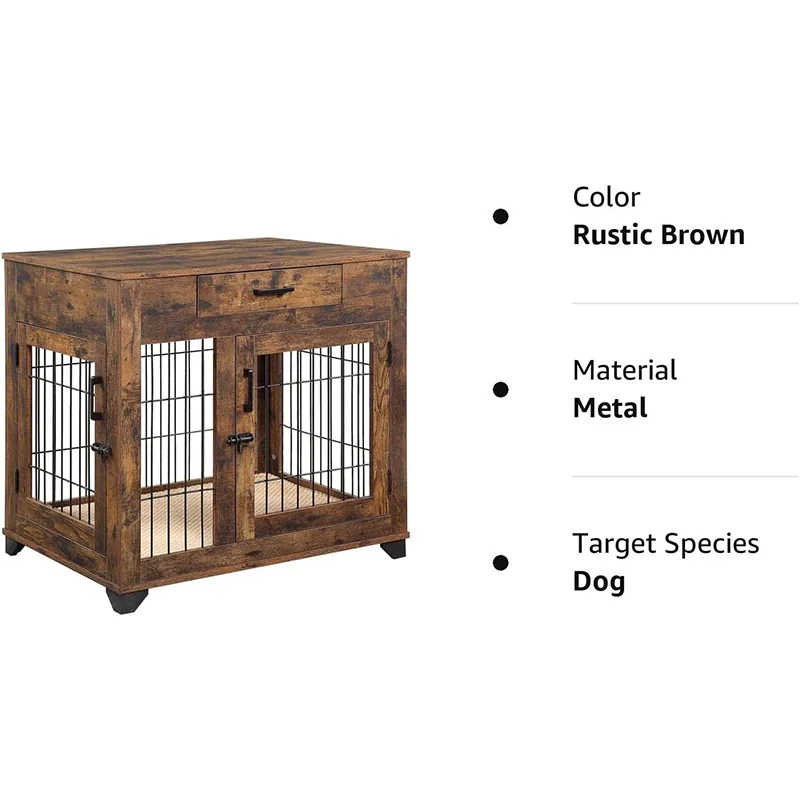
Why Choosing a Specialized Pet Furniture Manufacturer Matters
Pet furniture is subjected to unique physical stressors that traditional residential cabinetry rarely encounters. To survive in high-end retail markets, products must endure specialized mechanical wear, including:
- Continuous localized friction from cat scratching.
- Destructive teething and chewing behaviors from dogs.
- High-velocity kinetic impacts from large-breed jumping.
- Recurrent exposure to moisture, saliva, and organic waste.
- Constant structural shifting from dynamic weight loads.
General residential furniture factories often lack the technical expertise to engineer solutions for these specific behavioral patterns. Conversely, an experienced pet furniture manufacturer focuses entirely on pet-safe product engineering. This means structural reinforcement, non-toxic chemical compliance, advanced scratch-resistant coatings, and high-durability export packaging standards. The result: maximized customer satisfaction, with your after-sales liability dropped to near zero.
Comprehensive OEM & ODM Pet Furniture Manufacturing Solutions
We operate with advanced industrial infrastructure. Our engineering and production capabilities function as a direct extension of your corporate research and development team, accelerating your time-to-market.
Private Label Customization and Branding
We provide highly flexible private label workflows designed to embed your brand identity directly into the manufacturing line:
- Automated, high-definition laser logo engraving on timber surfaces.
- Custom-engineered, branded structural hardware and connecting joints.
- Retail-ready packaging design featuring custom private label inserts.
- Automated product labeling and barcode integration for Amazon FBA fulfillment.
Custom Product R&D and Structural Optimization
Our specialized engineering team guides your product concepts through a rigorous validation funnel:
- Comprehensive 3D CAD drawing evaluation and structural stress-testing.
- Rapid prototype sampling to verify physical tolerances and assembly workflows.
- Advanced value engineering and strategic material matrix recommendations.
- Structural design modifications aimed at reducing volumetric shipping cubes.
Your upcoming catalog may feature minimalist cat wall systems, heavy-duty wooden dog enclosures, or multi-functional modular pet beds. Either way, our facility transforms creative concepts into production-ready, high-margin inventory.
Flat-Pack Design and Volumetric Freight Optimization
Cross-border freight costs represent a major threat to the landed margins of international furniture brands. To maximize container loadability (CBM optimization) and compress logistics overhead, we engineer differently. Our products are designed from the ground up around flat-pack, Knock-Down (KD) hardware architectures.
Key logistical advantages of flat-pack engineering include:
- Maximizing the total units loaded into a single 40ft HQ container, lowering the per-unit ocean freight cost.
- Drastically reducing empty air volume inside retail cartons to avoid dimensional weight surcharges during last-mile domestic postal delivery.
- Compressing total warehouse footprints, leading to lower third-party logistics (3PL) storage fees.
- Simplifying fulfillment handling for Amazon FBA ecosystems and international distribution hubs.
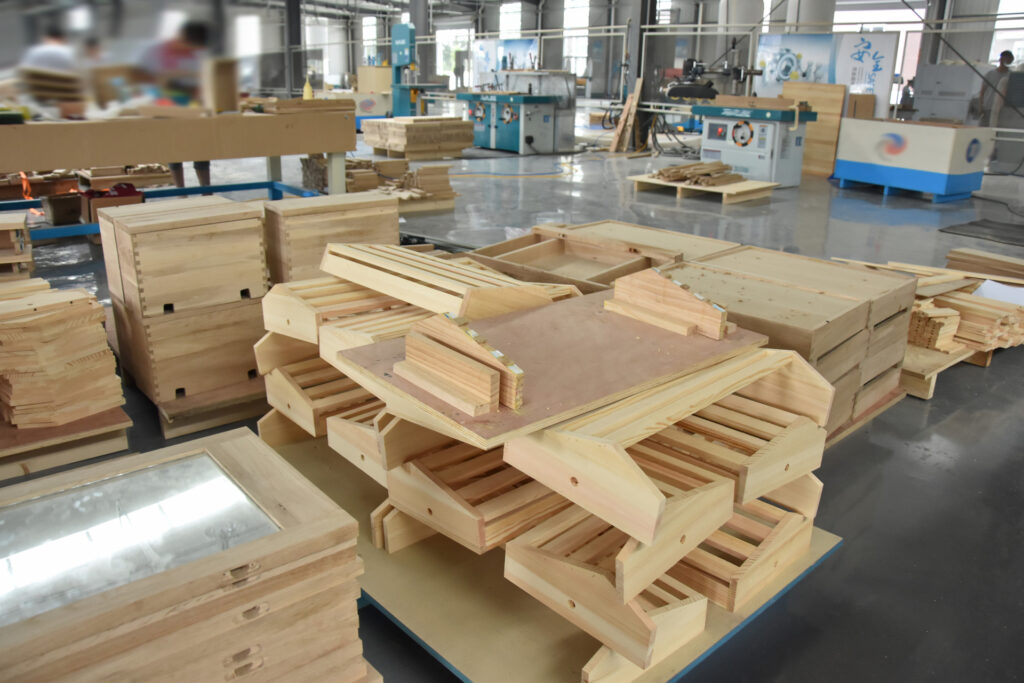
Strategic Material Selection for Pet Furniture Manufacturing
Different wood species offer distinct chemical and physical advantages regarding mechanical hardness, wholesale material cost, and volumetric weight brackets.
Rubberwood: The High-Volume Cost-Performance Leader
Rubberwood is the premier hardwood substrate for scalable, cost-efficient OEM pet furniture lines. Harvested as a sustainable byproduct of the latex industry, it integrates effortlessly with global FSC-friendly supply chain mandates. It features exceptional screw-holding strength and density. This makes it the ideal choice for Knock-Down (KD) flat-pack cat trees, modular condos, and pet stairs. All of them require repeated end-consumer assembly.
Oak: The Premium Benchmark for Luxury Line Integration
Oak represents the absolute ceiling of furniture-grade luxury in the global pet market. Oak boasts a highly distinct cathedral grain and superior physical hardness. It provides peerless resistance to aggressive biting, chewing, and deep claw scratching. Oak commands a higher material cost and adds to the volumetric freight weight. In return, it allows premium brands to achieve massive retail price premiums by targeting affluent demographics. It is the definitive choice for heavy-duty designer dog crates and architectural cat towers.
Birch Plywood: The Precision Canvas for CNC Fabrication
Birch plywood is highly celebrated for its extreme dimensional stability and resistance to cross-grain warping. Its uniform grain structure leaves a completely smooth, splinter-free edge after passing through high-speed CNC routing and laser cutting channels. This guarantees optimal safety for pet paws and snouts. It is the preferred material for complex, modular cat wall shelves and precision-engraved architectural pet systems.
Technical Performance Matrix: Pet Furniture Wood Species
| Wood Species | Scratch & Impact Resistance | Volumetric Shipping Weight | Raw Material Cost Tier | Ideal Market Positioning |
| Rubberwood | High | Medium | Moderate | Volume drivers, Amazon/D2C cost-performance lines |
| Pine Wood | Low to Medium | Light | Low | Budget segments, small animal habitats, rustic designs |
| Oak | Exceptional | Heavy | High | Luxury home integration, ultra-premium boutique lines |
| Birch Plywood | Very High | Medium | Moderate to High | Modern Scandinavian design, precision CNC routed lines |
Moisture Content (MC) Control: Eliminating Post-Shipping Defects
The primary cause of catastrophic wood failure is negligent Moisture Content (MC) management at the factory level. This includes panel splitting, joint loosening, and structural warping after export. Wood is a highly hygroscopic material that continuously balances its internal moisture with the relative humidity of the surrounding air.
An OEM order produced in a humid, coastal Asian manufacturing hub may carry unverified, high internal moisture content. It then ships to a dry winter environment in North America or Northern Europe. There, the timber will rapidly release water cells. This rapid, uneven contraction leads to irreversible cell collapse, cracked panels, and misaligned joints.
To guarantee international product stability, SolidPetWood enforces strict computerized kiln-drying and environmental chamber equalization protocols. We systematically stabilize all raw timber to an optimal 8% to 11% MC range prior to CNC processing. This precise targeting matches the Equilibrium Moisture Content (EMC) of Western target markets, eliminating post-shipping climate shock.
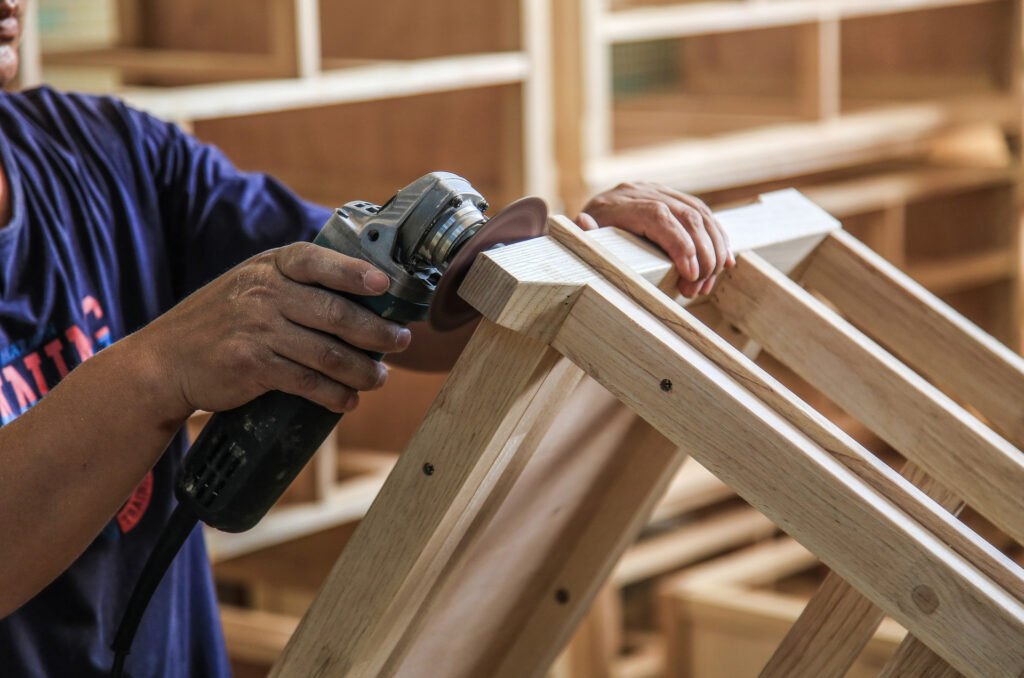
Industrial Quality Control and Global Export Compliance
Maintaining rigid quality management systems (QMS) across high-volume production cycles is mandatory for sustaining B2B supply chain integrity. Our multi-stage quality control process encompasses:
- Pre-Production Inspection: Thorough verification of timber origin, FSC chain-of-custody documentation, and digital moisture content screening.
- In-Line Precision Auditing: CNC alignment checks to ensure structural assembly tolerances remain within strict millimeter thresholds.
- Surface Coating Compliance: Verifying that all applied finishes, sealants, and water-based lacquers are entirely non-toxic, lead-free, and pet-safe.
- Pre-Packaging Assembly Testing: Random pull-out testing to evaluate joint stability and confirm that flat-pack hardware kits are complete.
- ISTA-Standard Drop-Testing: Implementing reinforced export packaging solutions—including double-wall corrugated cartons, high-density EPE foam corner buffers, and scratch-resistant protective sheets—to survive long-distance ocean freight transit and brutal parcel carrier handling.
🙋♂️ FAQ SEO Section: Frequently Asked Questions
Can a pet furniture manufacturer handle custom private label branding?
Yes. Professional manufacturers offer comprehensive private-label branding solutions, including high-definition laser engraving, custom metal branding plates, and branded silkscreen printing integrated directly into the factory’s CNC production line.
What is the typical MOQ for custom solid wood pet furniture orders?
Minimum Order Quantities (MOQs) typically depend on the specific wood species and complexity of the design. For standard volume production running on optimized CNC cutting paths, MOQs generally start at 100–300 units per SKU, though mixed-material or shared-component collections can often be optimized for flexible starting runs.
How are shipping damages prevented in flat-pack pet furniture?
To prevent international shipping defects, a top-tier manufacturer enforces strict e-commerce packaging standards. Cartons are engineered with high-density EPE foam corner guards, double-wall corrugated exterior cardboard, and scratch-resistant protective sheets between individual wood panels, passing rigorous ISTA drop tests before bulk container loading.
What materials are commonly used in wooden pet furniture?
Common materials include rubberwood, oak, birch plywood, pine, and engineered wood combinations depending on the product category and target market.
Build Your Pet Furniture Brand with a Reliable Manufacturing Partner
Launching a sustainable, highly competitive pet furniture collection demands far more than basic aesthetic design. Long-term commercial success in the global arena relies on unwavering batch-to-batch product consistency, advanced material science, structural engineering for flat-pack cost reduction, and rigorous legal and customs compliance.
At SolidPetWood, we act as a dedicated industrial asset for international pet brands, providing the manufacturing precision and supply chain scaling required to capture high-end market share.
OEM/ODM Support
Need a custom cat tree production plan?
Send reference photos, target dimensions, material preferences, packaging needs, and market direction. We can review feasibility, sampling, MOQ, and export packaging before production. Request OEM QuoteRelated Product Lines
Explore wooden cat furniture we can manufacture.
Related Buyer Guides