
Many buyers start with a simple request: one or two wooden shelves that cat owners can mount on the wall. That can work as a single SKU, but it misses the bigger commercial opportunity. Modular cat wall shelves are not just individual boards. For wholesale buyers, they are a product system: starter kits, expansion packs, bridges, perches, scratching modules, and full wall playground sets that can be combined into different retail offers.
That matters because wall cat furniture behaves differently from freestanding cat trees. A cat tree is usually a one-time purchase. A modular wall system can be sold in stages. A customer may buy a three-piece starter kit first, then add a bridge, a hammock, or extra steps later. For brands and importers, that means more SKU flexibility, better visual merchandising, and a stronger path to higher average order value.
We manufacture solid wood cat furniture for OEM and wholesale buyers, including freestanding cat trees and wall-mounted systems. This guide explains how to approach modular cat wall shelves as a scalable B2B product line, not just a decorative shelf product.
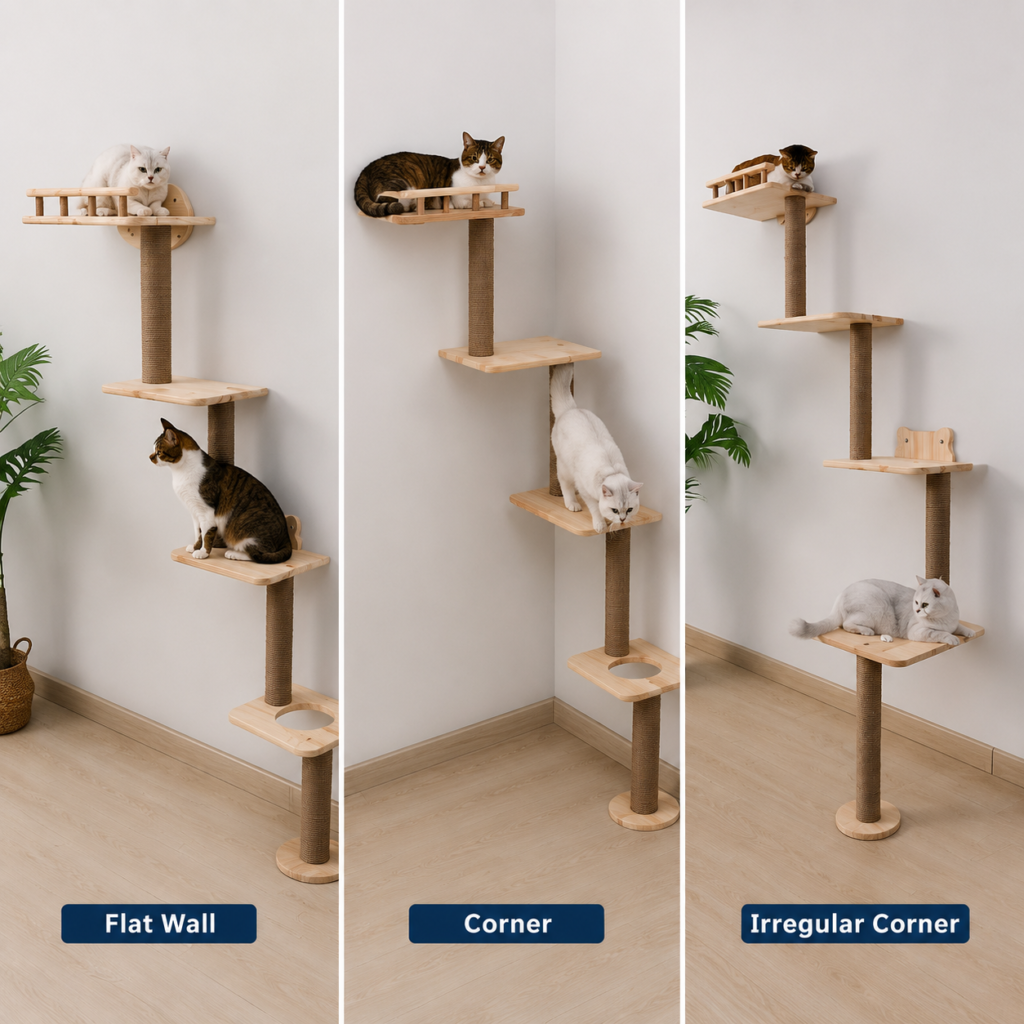
What Are Modular Cat Wall Shelves?
Modular cat wall shelves are wall-mounted cat furniture components designed to work together as a system. Instead of selling one fixed wall shelf, the product line is built from repeatable parts that buyers can combine into multiple kits.
A basic modular system may include:
- Wall shelves for jumping and resting
- Cat steps for vertical movement
- Bridges between shelves
- Perches for sleeping or lookout points
- Scratching panels or posts
- Hammock modules
- Corner shelves
- Complete wall playground sets
The difference is standardization. Each module should follow a consistent design language, mounting logic, finish system, and packaging structure. This allows the same component to appear in several retail combinations without redesigning the entire product each time.
For example, a 30 cm wall step can be sold as part of a three-piece entry kit, a six-piece climbing set, or an add-on accessory pack. The buyer gets more commercial use from one developed component, while the manufacturer can keep production stable.
Why Modular Cat Wall Shelves Work for Wholesale Buyers
The strongest reason to source modular cat wall shelves is not style. It is product-line economics.
They Fit Small Living Spaces
Wall-mounted cat furniture is especially useful for urban markets where floor space is limited. A customer who cannot fit a 60 cm base cat tree may still have open wall space. That makes modular wall systems attractive for apartment buyers, modern interior brands, and pet retailers targeting younger city customers.
This is also why wall furniture pairs well with our broader wall cat furniture product line. The category solves a different space problem from freestanding cat trees, so it should not be treated as a direct replacement.
They Create Better SKU Architecture
A freestanding cat tree is usually sold as one item. Modular cat wall shelves can become several SKUs:
- Entry-level shelf set
- Standard climbing kit
- Premium full-wall set
- Add-on bridge
- Replacement cushion
- Extra scratching board
- Seasonal color variant
This gives brands more ways to test price points without changing the entire product. An Amazon seller might launch a compact starter kit first. A DTC brand might lead with a full wall playground set in lifestyle photography. An importer might offer the same base components in different bundle sizes for different retailers.
They Ship More Efficiently Than Large Cat Trees
Large freestanding cat trees can be bulky, even when flat-packed. Modular cat wall shelves are usually flatter, lighter, and easier to cartonize. This improves container loading, lowers damage risk, and makes LCL test orders more practical.
That does not mean packaging is simple. Modular systems often include more small hardware parts, so the hardware bag, instruction sheet, and carton labeling must be controlled carefully. But from a CBM perspective, modular wall furniture is usually easier to manage than tall multi-level structures.
For broader shipping planning, see our guide to pet furniture shipping cost from China.
Common Modules in a Wall Cat Furniture System
The best modular cat wall shelves product lines are built from a small number of repeatable components. Too many unique parts make production slower, packaging more complicated, and inventory harder to manage.
| Module | Function | B2B Value |
|---|---|---|
| Wall shelf | Resting and jumping surface | Core entry SKU |
| Cat step | Vertical movement between levels | Low-cost add-on |
| Wall perch | Wider resting point | Premium visual element |
| Bridge | Connects two shelves | Raises perceived value |
| Hammock module | Comfort feature | Differentiates the set |
| Scratching panel | Daily scratching behavior | Useful replacement SKU |
| Corner shelf | Uses difficult wall space | Good for apartment layouts |
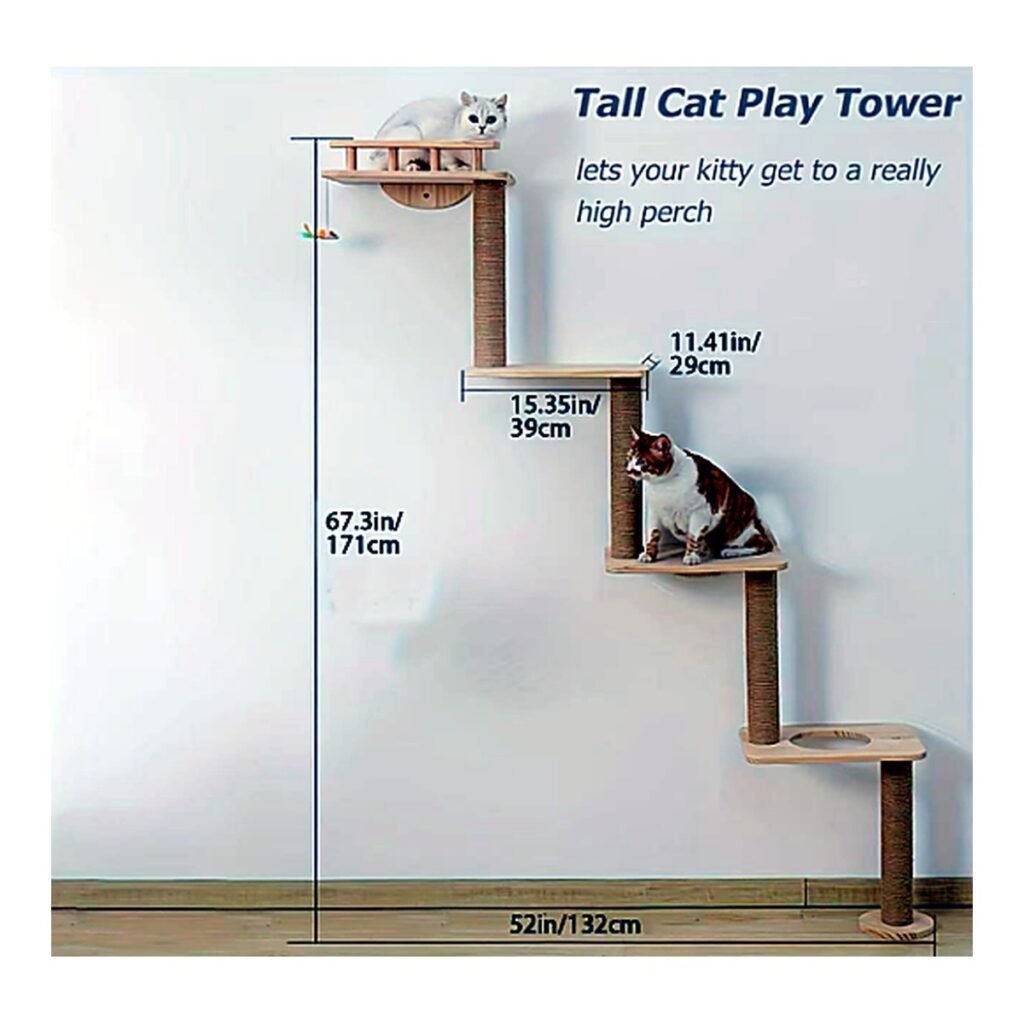
| Full wall set | Complete play route | Hero product for brand photography |
For most wholesale buyers, the practical starting point is not a large, complex set. It is a controlled system with three product levels:
- Starter kit: 3 pieces, easy to install, low entry price
- Standard kit: 5-7 pieces, enough to create a visible climbing route
- Premium kit: shelves, bridge, perch, scratching module, and hammock
This structure makes the line easier to explain to retailers and end customers. It also gives the buyer room to test demand before committing to deeper inventory.
Materials for Modular Cat Wall Shelves
Material choice affects price, appearance, weight, packaging, and wall load. For modular cat wall shelves, we usually recommend solid pine or birch depending on the buyer’s target market.
Pine is the most practical option for many wall systems. It is lighter than denser hardwoods, easier to machine, and suitable for natural, white, or stained finishes. Natural pine works well for Scandinavian-style and minimalist pet furniture lines.
Birch gives a cleaner grain and more consistent surface. It is useful for buyers targeting a more premium look, especially when the product needs a smooth painted finish.
Charred pine is a stronger differentiation option. A Shou Sugi Ban-inspired finish gives the shelf a darker, textured appearance that is harder for commodity suppliers to copy at low cost. It is best used as a premium SKU rather than the entire product line.
For sustainability-focused buyers, FSC-certified wood can be specified during sourcing. For buyers selling into North America, finish and adhesive compliance should also be reviewed. Our broader material and compliance standards are covered on the materials and certifications page, with additional detail on FSC-certified wood sourcing and CARB Phase 2 compliance.
Hardware and Load Rating Matter More Than Style
Wall-mounted products fail in a different way from freestanding cat trees. A freestanding tree usually fails through wobble, tipping, or loose post connections. Wall-mounted furniture usually fails because of poor installation, weak brackets, missing hardware, or unclear load expectations.
For modular cat wall shelves, hardware is part of the product, not an accessory. Buyers should confirm:
- Bracket type and metal thickness
- Screw and anchor specification
- Supported wall types
- Load rating per shelf
- Whether load testing includes dynamic movement
- Whether the hardware bag is packed and labeled consistently
- Whether the instruction manual is clear enough for end users
We generally design wall shelves around reinforced mounting points and concealed or semi-concealed steel brackets. For standard residential use, each shelf needs a clear stated load rating and installation method. If the shelf is marketed for large cats or multi-cat households, the specification should be upgraded rather than simply described with stronger marketing language.
This is where many low-cost wall shelves create return problems. The wooden shelf may be fine, but if the consumer receives weak anchors, vague drilling instructions, or no wall-type guidance, the product becomes risky after sale.
For buyers comparing this category with freestanding products, our wall mounted vs freestanding cat tree guide explains the structural and commercial trade-offs.
How to Configure a Wholesale Product Line
The most efficient way to source modular cat wall shelves is to plan the retail line before developing the sample. If you only sample one shelf, you may end up with a product that looks acceptable but cannot support a full assortment.
A practical B2B line might look like this:
Entry set: Three shelves or two shelves plus one step. This is the low-risk SKU for Amazon sellers, first-time category tests, and retail buyers who want an accessible price point.
Core set: Five to seven pieces with a clear climbing path. This should be the main volume SKU because it looks complete in product photography without becoming too expensive to ship.
Premium set: A full wall playground with bridge, perch, scratching module, and hammock. This is the best option for DTC brands and pet retailers that need a visual hero product.
Add-on modules: Extra steps, replacement cushions, scratching panels, and expansion bridges. These are important because they give the brand a way to keep selling after the first purchase.
The mistake is trying to make every module unique. A better approach is to use shared dimensions, shared hardware, and shared packaging logic wherever possible. That keeps production stable and makes reorders easier.
OEM Customization Options
Modular cat wall shelves are well suited for OEM development because the same product architecture can be adapted to different brand positions. Common customization options include:
- Shelf size and thickness
- Wood species
- Finish color
- Bracket color
- Visible or concealed hardware
- Cushion material and color
- Module combination
- Logo engraving or stamping
- Retail box design
- Instruction manual layout
- Amazon-ready carton labeling
The most important step is sample planning. A buyer should decide whether the sample represents one module, one kit, or the full system. For a modular line, we usually recommend sampling at least the core set rather than a single shelf. That lets the buyer check spacing, mounting flow, hardware consistency, and visual balance.
How MOQ Is Evaluated
MOQ for modular cat wall shelves should be evaluated by project, not advertised as one fixed number. The reason is simple: two products may both be called “wall shelves,” but the production complexity can be completely different.
A single pine shelf with standard brackets, natural finish, and neutral packaging is very different from a full modular wall playground with bridges, hammocks, scratching panels, custom hardware color, branded retail box, and a multi-language installation manual. The second project requires more components, more suppliers, more assembly checks, and more packaging control.
When we evaluate MOQ, we look at:
- Number of unique modules in the set
- Wood species and finish process
- Whether new hardware or brackets are required
- Branded packaging requirements
- Cushion, rope, hammock, or fabric customization
- Assembly instruction complexity
- Sample iteration risk
- Whether the buyer is testing one SKU or building a full product line
This is why we prefer to discuss MOQ after reviewing the product brief. A simple starter kit may be suitable for a lower test order, while a complex custom system may require a larger production run to make material sourcing, setup, and QC practical.
Our full OEM process explains how we move from product brief to sample and production. If you are testing the category before committing to a full product line, review our approach to small-batch pet furniture OEM and the sample order process.
Packaging and Export Considerations
Packaging for modular cat wall shelves needs more control than many buyers expect. The components are flat, but the order includes multiple hardware types and installation steps. A missing screw pack can create the same customer-service problem as a damaged shelf.
For export orders, we focus on:
- Carton structure matched to flat wooden parts
- Corner and edge protection
- Moisture-resistant inner packing
- Separate labeled hardware bags
- Clear installation instructions
- Barcode and SKU labeling
- Drop-test review for retail or e-commerce cartons
If the product is sold online, the instruction manual is especially important. Wall-mounted furniture requires the customer to drill, measure, level, and understand wall types. A clean installation guide reduces support tickets and negative reviews.
For more detail on export packing, see our pet furniture export packaging guide.
Who Should Source Modular Cat Wall Shelves?
Modular cat wall shelves are a good fit when the buyer wants a differentiated, design-forward cat furniture line rather than a single commodity SKU.
Amazon sellers can use a small starter kit to test demand, then expand into larger sets once reviews and conversion data are stable.
DTC pet brands can use modular wall systems as a visual hero product. The category photographs well in modern interiors and supports strong brand storytelling around space-saving design.
Importers and distributors can offer several retail bundles from the same base components, which simplifies purchasing and inventory planning.
Pet retail chains can carry entry kits in-store and sell premium wall playground sets online or by special order.
This category is less suitable for markets where renters dominate and drilling into walls is a major barrier. In those channels, freestanding cat trees may still be the safer volume product.
Start a Modular Cat Wall Shelves Project
If you are evaluating modular cat wall shelves for an OEM or wholesale program, the useful starting point is a product brief. Send reference images, target retail price, preferred module list, finish direction, launch quantity range, and packaging requirements.
We can help convert that brief into a sample-ready wall cat furniture system with solid wood materials, suitable hardware, export packaging, and private-label options.
OEM/ODM Support
Need a custom cat tree production plan?
Send reference photos, target dimensions, material preferences, packaging needs, and market direction. We can review feasibility, sampling, MOQ, and export packaging before production. Request OEM QuoteRelated Product Lines
Explore wooden cat furniture we can manufacture.
Related Buyer Guides