
Pet furniture quality inspection is the systematic process of verifying materials, construction, finish, and safety compliance before a production batch ships from the factory. For B2B buyers sourcing from OEM or ODM manufacturers, a proper pet furniture quality inspection is the last line of defense between your order and a container of returns, warranty claims, or — worst case — a product safety recall. Getting this right is not optional; it is the difference between a profitable product line and an expensive lesson.
What Is Pet Furniture Quality Inspection?
Pet furniture quality inspection is a structured evaluation performed on finished or semi-finished pet furniture products to confirm they meet the buyer’s specifications, safety standards, and quality expectations before goods leave the factory. A thorough pet furniture quality inspection covers five key areas: material verification, structural integrity, surface finish and coating safety, dimensional accuracy, and compliance documentation. Unlike consumer spot-checks, B2B inspection follows standardized protocols — typically AQL (Acceptable Quality Level) sampling — to make statistically valid accept/reject decisions on entire production batches.
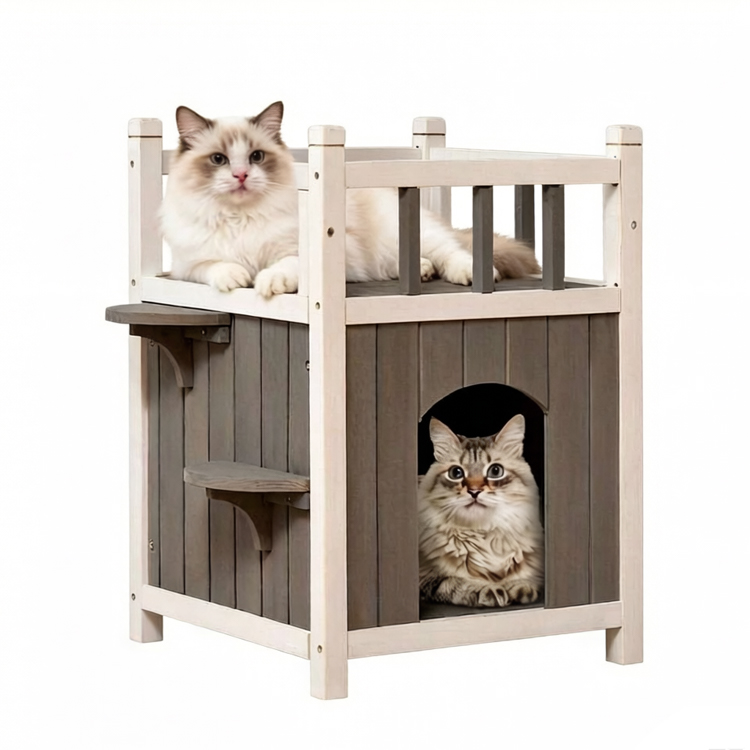
Pet Furniture Quality Inspection — Key Checkpoints
| Inspection Area | What to Check | Acceptable Standard | Common Failure |
|---|---|---|---|
| Wood species | Grain pattern, density, color consistency | Matches approved sample and spec sheet | Substitution with cheaper species |
| Moisture content | Handheld moisture meter reading | 8–12% for indoor furniture | Above 14% → warping, cracking after delivery |
| CARB certification | Formaldehyde emission test report | CARB Phase 2 / EPA TSCA Title VI compliant | Missing or expired certificate |
| Hardware | Screws, hinges, brackets, connectors | Correct spec, no rust, proper torque | Wrong size, poor plating, loose fit |
| Surface finish | Coating adhesion, smoothness, color | No bubbles, drips, orange peel; matches Pantone | Uneven spray, missed spots, wrong sheen |
| Pet-safe finish | VOC content, non-toxic certification | Zero or low VOC, pet-safe certified | Standard industrial coating used instead |
| Dimensions | Length, width, height, opening sizes | Within ±2 mm of spec | Cumulative tolerance drift across batch |
| Structural load | Static and dynamic load test | Holds rated weight × 1.5 safety factor | Joint failure under load |
| Assembly fit | Test assemble 2–3 units from batch | All parts fit without forcing | Holes misaligned, parts don’t match |
| Packaging | Box integrity, padding, labeling | No damage risk in transit; correct SKU labels | Thin cardboard, insufficient corner protection |
How to Conduct Pet Furniture Quality Inspection at the Factory
Step 1: Define Your Inspection Standard Before Production Starts
Do not wait until goods are finished to decide what “acceptable” means. Before the OEM production process begins, provide the factory with:
- An approved golden sample — the physical reference piece that defines acceptable quality. Every inspector decision traces back to this sample.
- A written specification sheet — dimensions with tolerances, wood species and grade, finish type and color code, hardware specifications, and packaging requirements.
- AQL level — most pet furniture B2B orders use AQL 2.5 for major defects and AQL 4.0 for minor defects. This determines your sample size and accept/reject numbers based on batch quantity.
Sharing these documents upfront eliminates the most common source of quality disputes: different expectations between buyer and factory.
Step 2: Perform In-Line Inspection at 30–40% Completion
Do not wait for the entire order to finish before inspecting. An in-line inspection when production is 30–40% complete catches systematic problems early — when the factory can still correct them without scrapping the entire batch.
Check at this stage:
- Are they using the correct wood material specified in the order?
- Is the cutting and machining consistent with the golden sample?
- Are joints tight and properly aligned?
- Is the finish being applied correctly (number of coats, drying time between coats)?
If you find a systemic issue at 30%, the factory reworks 30% of the order. If you find it at 100%, the factory reworks everything — or you accept substandard goods.
Step 3: Conduct Pre-Shipment Inspection on Finished Goods
The pre-shipment inspection (PSI) is the formal final check before goods are released for shipping. This is where AQL sampling applies:
- Select samples randomly from the finished batch — not hand-picked by the factory
- Visual inspection — check every sampled unit against the golden sample for finish, color, hardware, and overall appearance
- Dimensional check — measure critical dimensions on every sampled unit
- Function test — assemble 2–3 units completely to verify all parts fit
- Load test — apply rated load to assembled units (for cat trees: dynamic load simulating jumping; for dog beds: static load at rated weight)
- Drop test on packaging — drop a packed unit from 76 cm (standard ISTA 1A) to check if packaging protects the product
Step 4: Verify Compliance Documentation
Before approving shipment, collect and verify:
- CARB Phase 2 certificate for all composite wood components (MDF, plywood, particleboard)
- FSC certification if your product claims sustainable sourcing
- Material safety data sheets for finishes and adhesives
- Test reports from accredited labs (CPSC compliance for U.S. market, EN 71 if applicable)
Missing documentation at this stage means the goods cannot legally clear customs in many markets. It is far cheaper to delay shipment than to have a container held at port.
Step 5: Document Everything with Photos and Reports
Create a standardized inspection report for every batch:
- Photos of defects found (with ruler for scale)
- Pass/fail counts per AQL criteria
- Measurement data for dimensional checks
- Factory corrective action for any failed items
- Final accept/reject decision with inspector signature
This documentation protects you in disputes and builds a quality history for each manufacturer you work with.
Pet Furniture Quality Inspection — Common Problems and Solutions
Wood Moisture Content Too High — What to Do?
Reject the batch or require kiln re-drying before finishing. Wood above 14% moisture content will warp, crack, or develop mold after shipping — especially when transiting from humid factory environments to dry destination climates. A $30 handheld moisture meter saves thousands in returns. Test at least 10% of pieces in every batch, measuring at the center of the board (not the edge, which dries faster and gives misleadingly low readings).
Surface Finish Peeling or Bubbling After Assembly?
This indicates the factory skipped proper sanding between coats or applied finish over contaminated surfaces (dust, oil, moisture). Check the finishing process during in-line inspection: confirm sanding grit sequence (typically 120 → 180 → 220 for solid wood), verify dust removal between coats, and check ambient humidity in the finishing room (should be below 65% RH). If finish adhesion fails the cross-hatch tape test (ASTM D3359), reject the batch.
Hardware Rusting in Storage or Transit?
Plating quality is the issue. Check hardware samples with a salt spray test report — quality furniture hardware should withstand 48+ hours of salt spray (ASTM B117) without visible corrosion. If the factory cannot provide salt spray test data, test 5–10 pieces yourself: wipe with a damp cloth and leave in a sealed bag for 72 hours. Any rust spots indicate inadequate plating that will fail in real-world use.
Assembly Holes Don’t Align Between Components?
This is a jig calibration problem at the factory. When pilot holes drift even 1–2 mm across a batch, assembly becomes difficult and joint strength drops. During in-line inspection, randomly assemble 3 units from different production stages. If alignment is off, require the factory to re-calibrate their drilling jigs before continuing. This problem gets worse over a production run as jigs wear, so early detection is critical.
Pet Furniture Quality Inspection: In-House vs Third-Party
| Factor | In-House Inspector | Third-Party Inspection (SGS, Bureau Veritas, etc.) |
|---|---|---|
| Cost | Salary + travel | Per-inspection fee (typically $250–400/visit) |
| Objectivity | Risk of factory influence | Independent, standardized |
| Expertise | Varies by hire | Trained inspectors, calibrated tools |
| Availability | Limited by headcount | Scalable, local inspectors near any factory |
| Report format | Custom, varies | Standardized, legally recognized |
| Best for | High-volume, repeat orders from trusted factories | New factories, first orders, small batch OEM |
Recommendation for most B2B buyers: Use third-party inspection for the first 2–3 orders from any new manufacturer. Once you have confidence in a factory’s consistency, you can transition to in-house or factory self-inspection with periodic third-party audits.
For buyers evaluating new manufacturers, combine quality inspection with a thorough factory assessment — see our OEM vs ODM guide to understand what level of manufacturing capability to expect.
How Proper Pet Furniture Quality Inspection Protects Your Business
Skipping or shortcuts on pet furniture quality inspection creates compounding costs that far exceed the inspection investment:
Returns and warranty claims eat margins. A single defective batch can generate return rates of 15–30%, turning a profitable order into a loss. Pet furniture with structural failures (collapsed cat trees, broken bed frames) generates not just returns but negative reviews that damage your brand for months.
Safety failures create legal liability. Pet furniture that splinters, collapses, or releases toxic fumes from non-compliant finishes exposes your business to product liability claims. The Consumer Product Safety Commission (CPSC) requires importers — not just manufacturers — to ensure products meet safety standards. You cannot outsource this responsibility.
Consistent quality builds repeat business. B2B buyers who inspect rigorously develop reputations for reliable products. Retailers and distributors reorder from brands that don’t generate customer complaints. Your inspection process is a competitive advantage that compounds over time.
Inspection data improves your supply chain. Every inspection report adds to your knowledge of each factory’s strengths and weaknesses. Over multiple orders, you develop data-driven criteria for factory selection, negotiate from a position of knowledge, and reduce defect rates progressively. See our sample ordering guide for how to evaluate factory capability before committing to production orders.
Investing in systematic pet furniture quality inspection is not a cost — it is the foundation of a sustainable import business. Start with clear specifications, inspect at multiple stages, document everything, and hold your manufacturers accountable to the standards your customers expect.
OEM/ODM Support
Need a custom cat tree production plan?
Send reference photos, target dimensions, material preferences, packaging needs, and market direction. We can review feasibility, sampling, MOQ, and export packaging before production. Request OEM QuoteRelated Product Lines
Explore wooden cat furniture we can manufacture.
Related Buyer Guides