Last spring, a European brand buyer opened two finish samples and called us before reading the spec sheet: one carried a faint chemical smell, the other smelled like nothing. Both were clear coats on solid pine — water-based on one, solvent-borne on the other — rewriting her sourcing brief on the spot.
How Water-Based Coating Works on Solid Wood Pet Furniture
Water-based coating suspends acrylic or polyurethane resins in water instead of solvents, forming a protective film as the water evaporates. It produces far lower VOC emissions than solvent-borne finishes, cures to a hard, repairable film suitable for claw contact, and preserves the wood’s natural color without ambering.
Sprayed on, water evaporates and resin fuses into a continuous film. In our workshop, the water-based line runs on a rhythm set by the drying rack, not the spray gun — humidity shifts the timeline. Judge readiness by touch and meter, not by clock. Modern acrylic-polyurethane hybrids reach hardness that stands up to claw contact and daily wiping, holding the wood’s natural tone without oil-based ambering.
How UV-Cured Coating Works and Where It Fits
UV-cured coating hardens through photoinitiators polymerizing under ultraviolet lamps — in seconds, with no evaporation step. For flat, regular components like shelf boards or rectangular platforms, a UV line coats and cures in a single pass — why panel operations adopted it early for high-volume flat parts.
UV light travels in straight lines — shadowed areas cure poorly or not at all. Routed inside corners, curved-perch undersides, recesses around bolt holes: the factory must design around line-of-sight curing or add touch-up stations, both eating the speed advantage. UV films are harder and more chemically resistant, but also more brittle — applied thick on moving wood, they micro-crack more readily than flexible water-based ones.
Water-Based vs UV Coating for Pet Furniture: Durability Compared
Neither wins on every axis — compare by failure mode, not brochure claims:
| Water-based coating | UV-cured coating | |
|---|---|---|
| Cure mechanism | Water evaporates, resin fuses | UV photoinitiators polymerize in seconds |
| Cure time | Days with flash-off between coats | Seconds per pass |
| Scratch resistance | Good; wears gradually | Harder; resists first scratches better |
| Repair | Spot repairs blend invisibly | Cured film never redissolves; patches rarely level |
| Shadowed areas | Sprays into recesses | Poor cure without secondary stations |
| Chemical resistance | Adequate for daily wiping | Edge for heavy daily cleaning |
Water-based fails gracefully; UV resists the first scratch. A cheap factory sells whichever line it already owns; a specialized manufacturer matches the coating to part geometry and cleaning reality. Under AQL inspection both pass at comparable rates — the difference is the factory’s focus: end-grain adhesion for water-based, recess curing for UV.
Drying, Curing, and Why Coating Choice Changes Your Production Schedule
The honest limitation of water-based coating: it dries slower. A two-coat schedule with proper flash-off adds days versus a UV line curing in seconds — time that lands directly in your lead time. Humidity adds variability — the same product moves at different speeds in dry and rainy weeks — which dehumidified rooms only partly tame.
This isn’t marketing, just the math of finishing: every extra wet day is a day on your lead time. A longer wet window means more dust settling on the film, so coating choice ripples into facility requirements — cleaner spray rooms, tack-off procedures — beyond chemistry. UV has the mirror constraint: almost no drying space, but a capital line of lamps and conveyors paying off only on shapes it can cure. If a supplier promises identical lead times year-round without mentioning drying conditions, treat the schedule as optimistic.
Emissions and Compliance: What CARB and TSCA Title VI Mean for Your Coating Spec
Coating choice alone doesn’t determine formaldehyde compliance; the substrate does. CARB Phase 2 and EPA TSCA Title VI regulate composite panels, while E0 and E1 grade the boards. On solid kiln-dried lumber with water-based or UV finishes, formaldehyde risk is inherently low — but the technical dossier still needs the paperwork.
A low-odor finish is not the same as a compliant product. The EPA’s formaldehyde emission standards target hardwood plywood, MDF, and particleboard, requiring third-party certification and labeling for US-bound goods. CARB’s Airborne Toxic Control Measure fact sheet says the same: regulate the panel, certify the chain, label the finished good. Solid wood sidesteps the panel problem by construction, but coatings, adhesives, and composite inserts still belong in your compliance documentation — keep lumber at verified 8–12% after kiln drying, record the coating system on the traveler, and file supplier declarations for audits.
How to Specify Coating Like a Professional Buyer
Specify the coating system by name, the number of coats, the target dry-film behavior, and the acceptance tests — cross-hatch adhesion, water-spot resistance, edge scratch. Name the standard your finish must satisfy, confirm the drying or curing method the factory will use, and require retained samples for pre-shipment comparison.
| Acceptance test | What it checks | Water-based focus | UV focus |
|---|---|---|---|
| Cross-hatch adhesion | Film bond to wood | Lifting around end grain | Cure skips in recesses |
| Water-spot test | Moisture resistance | Film softening | Edge cure |
| Edge scratch | Claw-contact durability | Gradual wear pattern | Micro-cracking on wood movement |
Vague specs produce vague finishes. “Non-toxic clear coat” means nothing on the shop floor; “two-coat water-based acrylic-polyurethane, satin, cross-hatch adhesion per factory standard, retained sample required” gives the team something to execute and the inspector something to check. We’ve rejected lots over a failed water-spot test the paperwork said should pass — the rework procedure says more than any certificate. Still choosing? Our pet-safe wood finishes guide covers the chemistry, our CARB certification guide the panel chain, and our solid wood cat tree manufacturer overview the full picture.
Ready to specify a finish with a factory that documents every coat? Send your drawing and finish requirements for an engineering review.
How Solid Pet Wood Handles Coating for Pet Furniture
Our finishing operation is built for auditability. The water-based line runs in dehumidified drying rooms, with readiness judged by touch and moisture meter, not by clock. Every lot faces the same acceptance battery — cross-hatch adhesion, water-spot resistance, edge scratch — with IPQC attention where each system needs it: end grain for water-based, recesses for UV. Retained samples stay on file for pre-shipment comparison, the coating system is recorded on the traveler, and supplier declarations live in the technical dossier. When a buyer asks what exactly is on their product, we answer with a batch number, not an adjective.
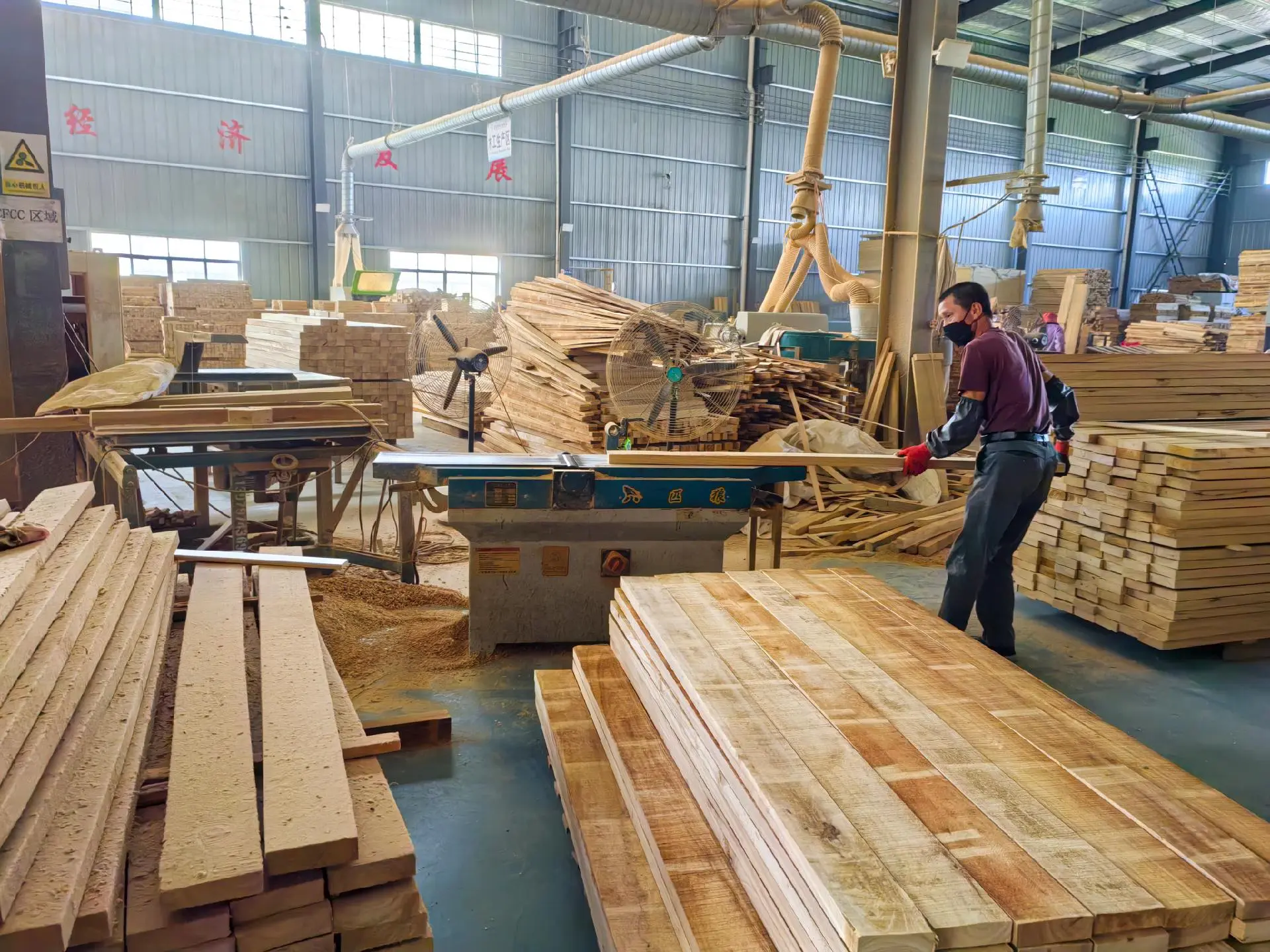
From our factory: How we match water-based and UV coating systems to part geometry in our finishing workshop.
FAQ
Which coating system lasts longer on a solid wood cat tree?
Both last for years indoors; they age differently. UV films resist the first scratches better; water-based films tolerate seasonal movement with fewer micro-cracks and accept invisible spot repairs.
Does choosing water-based coating delay my production schedule?
It can extend finishing by days versus UV curing: each coat needs flash-off and cure time, and humidity adds variability. A professional factory plans this into lead time with dehumidified drying rooms: ask for the drying schedule, not just the ship date.
Can UV coating handle curved or complex solid wood parts?
Only with workarounds: UV light can’t reach shadowed areas like routed inside corners or recesses, so complex shapes need secondary curing, manual touch-up, or design adjustments. For highly three-dimensional cat furniture, water-based is usually more practical.
How do I verify coating quality before shipment?
Put the inspection standard in writing: cross-hatch adhesion, water-spot resistance, edge scratch under AQL sampling. Keep a retained sample from the approved batch and compare production pieces against it at pre-shipment — end grain and recesses first.
Do different export markets require different coating documentation?
The chemistry rarely changes by market; the paperwork does. US-bound goods need TSCA Title VI traceability on composite content; EU buyers increasingly ask for REACH-aligned declarations on finishes and adhesives. Keep batch records and supplier declarations in your technical dossier from the first run.
OEM/ODM Support
Need a custom cat tree production plan?
Send reference photos, target dimensions, material preferences, packaging needs, and market direction. We can review feasibility, sampling, MOQ, and export packaging before production. Request OEM QuoteRelated Product Lines
Explore wooden cat furniture we can manufacture.
Related Buyer Guides