
Picture the same wall-shelf design shipped a year apart: the first batch assembles in minutes — every hole lines up, every dowel seats with finger pressure. The second needs a mallet, a drill, and a customer-service ticket. Same drawings, same wood; the difference is machining discipline — calibrated CNC with fresh tooling versus tired cutters with no first-article check.
What Does CNC Machining Change in Wooden Cat Furniture?
CNC machining replaces hand-guided cutting with computer-controlled toolpaths, so every part in CNC wooden cat furniture matches the digital drawing to sub-millimeter accuracy — and the ten-thousandth part matches the first. That repeatability is the whole story: a calibrated machine repeats yesterday’s precision tomorrow, which means parts that fit on the first try, in every carton.
In our workshop, the operators who once cut by hand now program, fixture, and verify — the skill moved upstream to the setup that makes ten thousand cuts identical.
| Manual machining | CNC machining | |
|---|---|---|
| Hole-position accuracy | Drifts with operator and jig wear | ≈±0.1–0.25 mm from one digital datum, single setup |
| Batch consistency | Jigs wear, operators change | Locked program repeats identically |
| Design changes | New physical templates | Program edit + ECO revision |
| Reorder after a gap | Tribal knowledge | Pull the locked program |
| Complex curves | Expensive to repeat | Program edit, same cost per cut |
The machine doesn’t make the part better — it makes the ten-thousandth part the same.
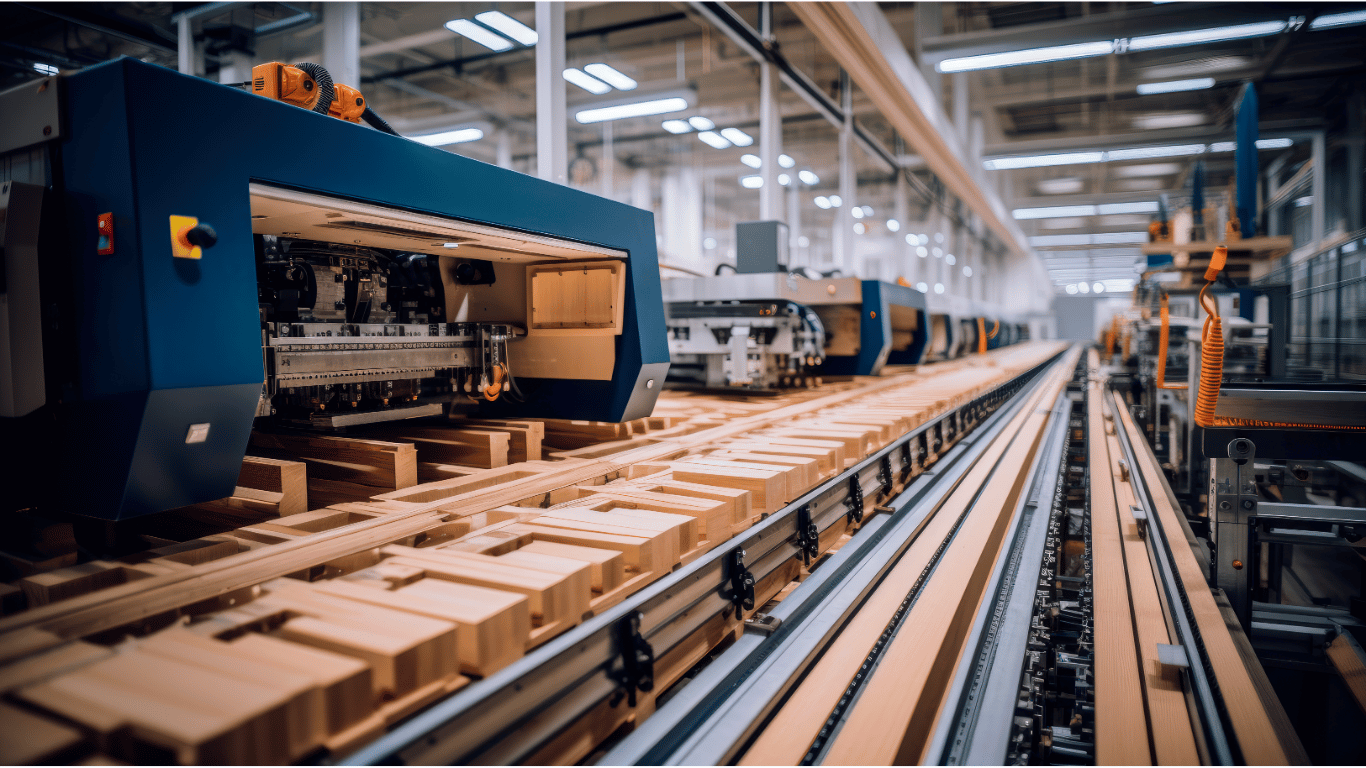
Hole-Position Accuracy: The Detail That Decides Assembly
Misaligned bracket holes are the top complaint on flat-pack cat furniture, usually caused by holes drilled in separate setups. CNC cuts every hole from one digital datum in a single setup, so a bolt that fits the first hole fits the sixth — the difference between a fifteen-minute assembly and a forty-minute fight.
During prototype iteration, once a hole pattern proves itself it is frozen in the program — no operator decision can drift it afterward. The machine remembers what humans forget.
Cutters wear: a dull bit cuts oversize holes and burns edges, so tooling schedules matter as much as the machine. A cheap factory will show you the machine; a specialized manufacturer will show you the measurement records. Ask how hole dimensions get verified during a run — IPQC sampling at the machining stage, not eyeballing finished parts.
Batch Consistency: Why the Ten-Thousandth Part Matches the First
Retailers reordering a bestseller six months later expect new cartons to assemble exactly like old ones. With CNC wooden cat furniture, the approved geometry becomes a locked program — an engineering change order is the only authorized way to alter it — so mid-season tweaks propagate identically, with no tribal knowledge.
Traceability is what makes AQL sampling meaningful: one program means the sample genuinely represents the lot. The practical test is the reorder: ask what happens procedurally when you reorder the same SKU after a gap — if the answer is pulling the locked program and its last ECO revision, you’re talking to a CNC-disciplined operation.
Complex Curves and Carved Details Buyers Can See
Beyond accuracy, CNC unlocks shapes hand routing cannot repeat economically: arched hideaway openings, contoured perch edges, decorative relief carving, rounded platform rims — the details customers photograph and reviewers mention.
That freedom lets a brand’s in-house design team differentiate without hand-retooling for every curve: a new arch profile is a program edit. In our workshop, designers iterate in the CAD model, cut one test piece, check it by hand and eye, then release — a prototype loop measured in hours, which is why CNC-equipped factories offer original silhouettes instead of catalog copies.
The machine cuts what the drawing describes — design judgment still decides minimum edge thickness. A beautiful curve with a paper-thin edge will chip in shipping no matter how precisely it is cut.
What CNC Can’t Fix: Honest Limits of Machined Precision
CNC precision has real limits. First, wood moves: a part machined at 12% moisture content shifts if it later dries to 7% in a heated warehouse. Machining unstable wood precisely is precision wasted — kiln-dried 8–12% lumber must enter the machine, not just leave the kiln.
Second, CNC cannot inspect itself: one wrong dimension in the drawing becomes ten thousand wrong parts at machine speed. We’ve seen it on a subcontracted batch — no first article, no check, a full run faithfully reproducing a typo. First-article inspection exists for this reason: the first part off a new program is measured against the drawing before the run continues.
Third, finish still needs hands: machining leaves tool marks invisible to the eye but visible under stain. Sanding, edge softening, and final inspection remain human work — the honest version of “hand-finished.”
How to Read a CNC Wooden Cat Furniture Factory’s Capability
Five questions beat any brochure:
| Question | Good answer sounds like | Red flag |
|---|---|---|
| Is joinery-critical machining in-house or subcontracted? | Named machines, named programmers | Vague “our partner handles it” |
| How are hole positions verified during a run? | IPQC sampling with gauges at the machine | “We check finished parts” |
| What triggers a tooling change? | Measurement-based schedule | Visible defects |
| Can you show a locked program with ECO history? | Revision-dated program for an existing SKU | “Our engineer keeps it in his head” |
| Is a first article measured before each run? | Measured against the drawing, signed off | “We start the run directly” |
A factory that answers all five concretely will have the QC records to match — the records our pet furniture quality inspection guide teaches buyers to request, from incoming moisture checks to AQL sampling at pre-shipment. For the operation behind the machines, see our solid wood cat tree manufacturer overview.
Precision You Can Specify
CNC wooden cat furniture is not about the machines — it is about what they guarantee: holes that line up, parts that interchange, reorders that match. This isn’t marketing — it’s the direct math of repeatability: one locked program, one measurement standard, zero operator drift. Specify the process, not the machine: in-house programming, tooling schedules, first-article inspection, ECO discipline. Want our team to evaluate a factory’s machining setup? Send your drawings through our request-quote page or start via our contact page.
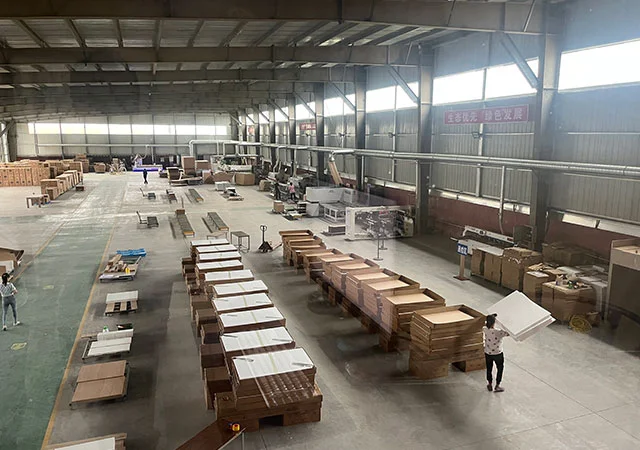
From our factory: Watch our CNC workshop machine solid wood cat furniture components with repeatable, sub-millimeter precision.
How Solid Pet Wood Runs CNC for Cat Furniture
Our CNC operation is built around one principle: the program is the product. In-house programmers turn approved drawings into locked toolpaths; jig fixtures hold every workpiece to the same datum; tooling changes follow a measurement-based schedule; every run starts with a first article measured against the drawing. Our in-house design team iterates in CAD, cuts a test piece, checks it by hand and eye, then releases — every change through a documented ECO, so a reorder six months later pulls the exact revision you approved.
FAQ
Does CNC machining mean the furniture is lower quality than handmade?
No — it means more consistent. CNC repeats the approved geometry identically; hand work varies piece to piece. Quality is not machine versus hand but whether the design, material, and finishing are good.
Can CNC equipment handle solid wood, or only panels?
Both — posts, platforms, and perches machine cleanly on CNC routers with proper feed rates and sharp tooling. The critical input is stable material: kiln-dried lumber at 8–12% moisture content, so parts don’t move after machining.
How does CNC machining affect lead time for new designs?
The first article takes longer — programming, fixturing, test cuts — but reorders and variants go faster because the program is locked and reusable. For seasonal brands, that front-loaded effort pays back across every later run.
What should I ask about tooling maintenance?
Ask what triggers a cutter change — measurement schedule or visible defects — and how hole dimensions are verified during the run. Dull tooling cuts oversize holes and burns edges; IPQC sampling at the machining stage catches wear before it becomes a bad batch.
Does machined precision reduce shipping damage?
Indirectly but really: parts that fit without force assemble into tighter structures, and tight structures survive ISTA 3A drop-test sequences better (3A procedures). The EPA formaldehyde standards page covers compliance for any composite panels in the design.
OEM/ODM Support
Need a custom cat tree production plan?
Send reference photos, target dimensions, material preferences, packaging needs, and market direction. We can review feasibility, sampling, MOQ, and export packaging before production. Request OEM QuoteRelated Product Lines
Explore wooden cat furniture we can manufacture.
Related Buyer Guides